Rechercher dans ce blog

Tuesday, September 1, 2020

Hermes tops August brokerage transactions with EGP 5bn, 15% market share - Daily News Egypt

brande.indah.link

The Hermes Securities Brokerage took the lead of value of stock trading in August, by executing EGP 5.07bn worth transactions, accounting for about 9% of the month’s total transactions.

It was followed by Financial Brokerage Group which controlled about 7.7% of the monthly turnover at EGP 4.3bn, with the duo accounting for about 16.7% of August trading.

In third place, the Commercial International Brokerage Company (CIBC) took a market share of 7.1% of stock market transactions during August, followed by Pioneers Securities and Beltone Securities Brokerage with transactions of 5.7% and 4.9%, respectively.

The companies competing for the top 10 spots on the monthly transactions list did not differ, with the exception of a change in position for some. The exception to this was Mubasher International’s entry to the top 10 list in August, at the expense of Naeem Research which came in 11th place.

Arabeya Online ranked sixth in August rankings, accounting for 3.8% transactions, followed by Mubasher and Sigma in seventh and eighth places, respectively. The latter two companies took an equal 3.6% share of the market, with a slight difference in the value of transactions.

Pharos Securities took 9th place, accounting for transactions worth EGP 1.9bn, representing about 3.4% of the transactions in August. Arqaam took a 3.1% share of the market, coming in at 10th place.

The Link Lonk


September 02, 2020 at 03:14AM
https://ift.tt/3bgsgsz

Hermes tops August brokerage transactions with EGP 5bn, 15% market share - Daily News Egypt

https://ift.tt/38jByTa
Hermes

adidas originals Pharrell Williams Basic Line Release - HYPEBEAST

brande.indah.link

Unveiled just two weeks ago, adidas by Pharrell Williams‘ new basics line of premium essentials has just landed.

The lineup encompasses a range of T-shirts, hoodies, sweaters, shorts, sweatpants and slides, enlivened by vibrant pop colors and understated tones. Each piece is crafted from softly-textured high oz. cotton that accentuates its relaxed cut. “HUMAN RACE” and adidas’ Trefoil logo have been subtly embroidered across each piece. Garments like the pink hoodie feature a tonal “HUMAN RACE” embellishment on the upper left chest, while other pieces like its matching sweatpants are similarly detailed with the same motif near the left pocket. Rounding off the assemblage is a pair of slides that come with an essential BOOST sole as well as breathable mesh uppers for optimal comfort and support.

adidas by Pharrell Williams’ new basics line is currently available on LN-CC’s website, ranging from $33 – $100 USD.

In other news, adidas’ YEEZY SLIDE “Bone” will be restocking.

Read Full Article
The Link Lonk


September 01, 2020 at 01:05PM
https://ift.tt/3hQ13zs

adidas originals Pharrell Williams Basic Line Release - HYPEBEAST

https://ift.tt/2CIcY2n
Adidas

Impact Hub Houston, Adidas seek entrepreneurs for mentoring program - Houston Chronicle

brande.indah.link

Impact Hub Houston, a tech accelerator focusing on socially conscious startups, is leading a partnership with sportswear maker Adidas and the global Impact Hub Network to mentor 30 entrepreneurs from underrepresented communities.

The program, called Close the Gap, will be coordinated in the United States by the Houston branch of the accelerator, said Grace Rodriguez, Impact Hub Houston executive director and CEO. The network has more than 100 locations around the world.

Close the Gap is looking for early-stage entrepreneurs who are from, or working with, underrepresented groups in the startup world with an idea that will have an impact on education or sports.

INNOVATION COMMUNITY: Most tech accelerators sticking with virtual programs for now

“To attract and select these entrepreneurs, we will develop and launch a communications campaign, which will be run by Impact Hub global, but also shared across the network and especially by two markets in specific: US and Germany,” Rodriguez said in a statement.

The program is looking for 10 participants from the United States, 10 from Germany and 10 from other nations.

Deadline to apply for the program is Sept. 17 at closethegap.impacthub.net.

Release Notes: Get Dwight Silverman’s weekly tech newsletter in your inbox each Monday

Once the 30 companies are identified, each will be assigned to work with an Adidas employee who will provide virtual support, advice and networking opportunities within Adidas and the Impact Hub Network. The program will last three months.

dwight.silverman@chron.com

twitter.com/dsilverman

houstonchronicle.com/techburger

The Link Lonk


August 31, 2020 at 12:00PM
https://ift.tt/32JqUCP

Impact Hub Houston, Adidas seek entrepreneurs for mentoring program - Houston Chronicle

https://ift.tt/2CIcY2n
Adidas

Prada and Adidas Reveal Their New Sneaker Collaboration - Vogue

brande.indah.link

“The clothes are simple, but with the concept of simplicity as an antidote to useless complication.” That was Miuccia Prada riffing on her pared-down menswear collection for spring 2021, but the idea resonates with her new Adidas collaboration. Prada and Adidas have come together to recreate the Superstar sneaker in full-grain leather, no bells or whistles added, just the two brands’ logos stamped on its side. It’s so subtle a take on the original design, a unisex sneaker created by Adidas in 1969, you might mistake it for an un-Pradafied sneaker—well, at least if you didn’t touch it and feel that this Superstar was handmade of buttery leather in Prada’s Marche region workshops.

Photo: Courtesy of Prada

The Prada Superstar will go on sale on September 8 at Prada and Adidas stores, representing the second phase of the brands’ partnership. Earlier this year, Prada and Adidas debuted their first sneaker: an all-white Superstar. Here, their latest take adds color and dimension, but a press release for the ongoing collaboration teases what’s next. Coming later this year, Prada and Adidas will debut pieces inspired by the America’s Cup, a sailing race Prada have participated in since launching its Luna Rossa team in 1997. The cup’s namesake sneaker is also one of Prada’s most iconic footwear designs, dominating the early aughts and starting a luxury sneaker craze.

The Link Lonk


August 31, 2020 at 06:09PM
https://ift.tt/3bb6oi8

Prada and Adidas Reveal Their New Sneaker Collaboration - Vogue

https://ift.tt/2CIcY2n
Adidas

Mobile Antenna Competition Intensifies as 5G Radio Access Network Deployment Grows; Huawei Remains Market Leader - PRNewswire

brande.indah.link

SINGAPORE, Sept. 1, 2020 /PRNewswire/ -- Competition in the antenna vendor market is heating up as 5G rolls out and market share is coming under serious pressure. In its recent analysis of the worldwide mobile cellular 4G and 5G antennas market, global tech market advisory firm, ABI Research, finds that Huawei remains the market leader in the base station antenna market, retaining first place in both the market share and vendor rankings. Following Huawei, other companies within the top five for market share includes, CommScope, Kathrein Mobile Communication, Rosenberger, and ACE Technologies.  Together, these five vendors comprise more than 70% of the total market in terms of revenue. While the names of the top 5 remains the same, there has been a shuffle in the order with CommScope has taking the second position in 2019.

2019 was the year that 5G started to roll out and trialed. By the end of 2019, South Korea reported more than 90,000 5G base stations had been deployed and China had built out more than 130,000 5G base stations. "The move toward the 5G rollout is creating new challenges as the antenna and radio must be integrated for optimal utilization of site space and network performance. The successful performance of the 5G network will increasing depend on the antenna, making antenna an essential component in the operator's network," explains Dean Tan, Research Analyst at ABI Research.

ABI Research forecasted growing demand for higher order number of antenna ports, such as 6 & 8 port and 10 to 16 ports. These two segments will make up more than 80% of the antenna shipments by 2025. In preparation for 5G, most antenna vendors (e.g., Huawei, Kathrein, RFS) have released their versions of the Active-Passive antenna or are working with OEMs for its development. This configuration allows for an active or a Massive-Multiple Input Multiple Output (m-MIMO) antenna array to be deployed along with the passive antenna array. The m-MIMO is key to achieving the higher capacity gains and throughput that 5G is expected to bring. However, challenges, such as limited site space and difficulty of acquiring new sites, requires vendors to develop innovative ideas for the 5G deployment. "With the deployment of 5G, we have seen remarkable growth and innovation in the integrated active antenna segment. To tackle the challenges of 5G deployment, there is a vital need for antenna vendors and OEMs to work closely in an integrated fashion," says Tan.

Aside from the 5G focus, antenna vendors continue to develop innovative solutions to overcome physical challenges. Kathrein released their "378-antenna platform" that generates air vortices to reduce the wind load experienced by an antenna. Wind load is a key challenge that antenna vendor wrestle with to ensure reliability and safety of the antenna and its tower. "While more 5G deployment is expected to come, operators in emerging and developed Markets are still upgrading and replacing their 4G antenna architecture.  Almost 90% of antenna sales in 2019 were still catering for the 4G LTE market. But that will change," adds Jake Saunders, Vice-President for Asia Pacific at ABI Research.

These findings are from ABI Research's Worldwide Mobile Cellular 4G and 5G Antennas Market application analysis report. This report is part of the company's 5G & Mobile Network Infrastructure research service, which includes research, data, and ABI Insights. Based on extensive primary interviews, Application Analysis reports present in-depth analysis on key market trends and factors for a specific technology.

About ABI Research

ABI Research provides strategic guidance to visionaries, delivering actionable intelligence on the transformative technologies that are dramatically reshaping industries, economies, and workforces across the world. ABI Research's global team of analysts publish groundbreaking studies often years ahead of other technology advisory firms, empowering our clients to stay ahead of their markets and their competitors. 

ABI Research提供开创性的研究和战略指导,帮助客户了解日新月异的技术。 自1990年以来,我们已与全球数百个领先的技术品牌,尖端公司,具有远见的政府机构以及创新的贸易团体建立了合作关系。 我们帮助客户创造真实的业务成果。 

For more information about ABI Research's services, contact us at +1.516.624.2500 in the Americas, +44.203.326.0140 in Europe, +65.6592.0290 in Asia-Pacific or visit www.abiresearch.com.

Contact Info

Global     
Deborah Petrara     
Tel: +1.516.624.2558       
[email protected]                                                   

SOURCE ABI Research

Related Links

http://www.abiresearch.com

The Link Lonk


September 01, 2020 at 03:00PM
https://ift.tt/31MCD4k

Mobile Antenna Competition Intensifies as 5G Radio Access Network Deployment Grows; Huawei Remains Market Leader - PRNewswire

https://ift.tt/3eIwkCL
Huawei

Coalition countering Huawei faces hurdles - Asia Times

brande.indah.link

This summer has seen the tech war between China and the US take on new dimensions. From new export controls via the US Department of Commerce banning the sale of US semiconductor “software” and “technology” to Huawei to the executive orders prohibiting transactions with TikTok and WeChat, the administration of President Donald Trump has been doubling down on its efforts to address China’s growing technology dominance. 

It has also witnessed many other countries take more legal measures against Huawei. For instance, the United Kingdom announced that it would formally exclude Huawei from its core network in mid-July. Similarly, Canada’s largest telecommunications company Telus has partnered with Ericsson and Nokia after receiving pressure from Canada’s intelligence authorities.

Both decisions represent a departure from previous commitments accepting Huawei earlier this year. 

In other places, such as Denmark, France and Slovenia, lawmakers have recently imposed “heightened security” requirements on telecom operators in order to weed out dependency on Huawei. In addition, Brazil has raised security concerns with 5G (fifth-generation telecom) equipment suppliers, going so far as to publish a normative instruction raising cybersecurity requirements for network operators. 

Finally, in Asia, both Singapore and India have taken a more defensive stance against the Chinese company, with the former excluding (but not banning) Huawei products in its 5G network while the latter announced in August it would phase out the company’s equipment over a period of time. 

Putting it into perspective

On closer examination, the rising tide against Huawei raises two fundamental yet paradoxical problems. 

First, since 2018, the Trump administration has at times blundered in its ability to persuade its allies formally to exclude the Chinese company from participating in their markets. By the beginning of 2020, it seemed that much of the world had simply snubbed US demands. 

But in August, some saw a reverse trend. Indeed, the launch of the US State Department’s “Clean Network Initiative” in late July coupled with the diplomatic reassertion of the Prague Proposals (and its more than 30 signatories) could signify a change in direction. 

Yet compared with the sheer size of Huawei’s presence in other countries and the tremendous progress the company has had through its recent R&D (research and development) initiatives, these victories seem rather negligible.

Huawei’s technology goals are much larger than 5G radio equipment deployment. They involve radically transforming digital connectivity, integrating cutting-edge IoT (Internet of Things) and cyber-physical technologies, and developing a cloud-based infrastructure for industrial platforms – initiatives that are still under way despite US pressure. 

Second, framing the US-China tech war as a binary choice of either accepting or rejecting Huawei is far too reductive. 

Many countries that have not formally excluded Huawei have raised concerns over the security of the ICT (information and communications technology) supply chain at large. Such concerns reflect the emergence of a new discipline centered on trust and cybersecurity within supply chains themselves.

And this discipline is drawing attention from many governments regardless of how they play the geopolitics because of the growing importance of the digital economy for nearly all aspects of life. 

Beyond these two paradoxical issues, an emerging trend in technology policy warrants attention, as it not only represents the creation of an industry-driven counterpoint to Huawei but could also become a major vehicle for the US to check China’s technological strength if Democratic contender Joe Biden becomes president.

Enter the O-RAN Coalition

Amid the larger US-China tech war, the Open Radio Access Network (O-RAN) has become a global buzzword for an anti-China coalition that bills itself as the pragmatic solution to the problem of relying too much on Huawei equipment for 5G networks. 

The O-RAN Alliance started as a loose organization comprising leading telecommunications companies including AT&T, Deutsche Telekom, NTT DOCOMO, Orange and China Mobile to develop the next generation of 5G architecture and interfaces.

By promoting network virtualization and software-defined networks centered on open-source architecture, proponents of O-RAN assert that 5G standards that foster open, transparent and interoperable networks will help build a supply chain ecosystem that minimizes the fear of technological fragmentation currently underscoring geopolitics. 

To be sure, the O-RAN Alliance is a standards-setting organization – in theory representative of global industry, not governments – and includes China Mobile as a major stakeholder. Indeed, Chinese companies have and continue to participate in ongoing 5G standards-development projects with their American, European and Japanese counterparts, including oneM2M. 

The O-RAN Policy Coalition, a separate organization, has taken the spirit of O-RAN and attempted to politicize it as a more friendly face to countering China without adopting the aggressive rhetoric of the Trump administration. 

For its proponents, O-RAN offers an opportunity to check China’s technological ambitions without heavy-handed economic decoupling. The Coalition notably does not include any Chinese companies but represents a diversified selection of global industry titans. 

The basic thrust of the O-RAN Policy Coalition is to take the principles of O-RAN (for example, transparency and openness) and implement them into policy considerations, something almost all countries have been working on with respect to supply chains generally.

Indeed, echoing this sentiment, the next-generation technologies need not push the world down a path of technological fragmentation but rather could offer industry the opportunity to embed security and trust within newly defined networks and supply chains. 

This embeddedness, while not excluding Huawei outright, would make it harder for that company to compete in markets as it would incentivize telecom operators to choose products that meet certain security and trust thresholds.

And these thresholds would likely result from policy commitments formulated through O-RAN where the influence of Chinese companies is either neglected or cast aside. 

As stated above, many countries are beginning to take ICT supply-chain regulation more seriously. The rise of Huawei has upset the political configuration of global communications and given rise to a range of alleged 5G security concerns from back-door interventions to inappropriate data transfer. 

The rhetoric of openness and trust surrounding O-RAN may help crystalize a loose alliance-structure for the United States and its allies. Indeed many US lawmakers have iterated that O-RAN represents the best shot the United States has for building a long-term anti-China coalition in the technology space.

Perhaps echoing the Prague Proposals, O-RAN could spill over and affect larger military and strategic arrangements in different parts of the globe, including those that counter China’s Belt and Road Initiative. 

For many policymakers across the world, the O-RAN option seems the easier pill to swallow compared with an outright Huawei ban because it allows them to retain diplomatic credibility with their Chinese stakeholders while limiting their dependency on Chinese technology.

And even if China tries to depict O-RAN as disguised discrimination, policymakers may fall back on a central talking point of the coalition. Namely, O-RAN is not anti-China – in fact, China could and should be a participant in global 5G security conversations. 

O-RAN dead on arrival?

Yet for all the hype, O-RAN might be dead before it arrives. And this has to do with the fundamental nature of the ICT market.

First, the push toward virtualization via the O-RAN initiative will ultimately not solve some of the larger 5G security problems because Ericsson and Nokia, the two competitors to Huawei for 5G equipment market share, buy input components from Chinese manufacturers. 

And even if these companies could somehow limit the potential for back-door interventions in the components of their technologies, another more fundamental reason will undermine the goals of O-RAN.

Virtualization and software-defined networks may be great for security purposes and can help Western companies get an upper hand on their Chinese competitors. But they also promote the opening of the telecommunications architecture and general market structure that has thus far privileged a handful of heavily integrated corporations.

Moving from hardware-focused to software-defined networks will require the creation of new applications, software and enterprise solutions, a task that opens the door to more startups and venture-capital opportunities. And the introduction of new players threatens to upset the current market balance. 

Moreover, the open-source architecture that underpins interoperable standards makes it harder for companies that develop such standards to charge licensing fees based on propriety ownership and intellectual property – a fact that generally discourages robust participation of standards development bodies from O-RAN. 

Hobbled by high capital expenditure requirements, low return on investment targets for R&D, and increased global competition, many of the leading ICT firms in the world have struggled to find stable sources of profit. Indeed, this is one of the reasons many companies in the United States, such as Intel, Cisco and Qualcomm, have prioritized design over manufacturing in recent decades and indirectly contributed to the decline of manufacturing in the country. 

For this reason, although ICT and telecom companies around the world may embrace the concept and spirit of O-RAN, they will also be wary of losing their incumbent status. This is partially why of the major 5G equipment manufacturers, only Nokia has joined the coalition. 

O-RAN could ignite a regulatory push around the world that favors the entry of new companies to the marketplace. And this entry could at some point force the exit of existing firms or further disrupt the current configuration of supply chains. Whether incumbent companies will tolerate this in order to check Huawei remains to be seen. 

Asia Times Financial is now live. Linking accurate news, insightful analysis and local knowledge with the ATF China Bond 50 Index, the world's first benchmark cross sector Chinese Bond Indices. Read ATF now. 

The Link Lonk


September 01, 2020 at 10:59AM
https://ift.tt/2EHW7Ow

Coalition countering Huawei faces hurdles - Asia Times

https://ift.tt/3eIwkCL
Huawei
Monday, August 31, 2020

More than 200 counterfeit Louis Vuitton bags seized in Louisville - WDRB

brande.indah.link

LOUISVILLE, Ky. (WDRB) -- More than $500,000 worth of Louis Vuitton bags were seized in Louisville early Monday morning. 

According to a news release, U.S. Customs and Border Protection (CBP) officers in Louisville inspecting a package at UPS Worldport found the bags. An import specialist later confirmed the 204 bags were counterfeit. If the bags were real, they would have been worth $583,440, according to officers.

“As e-commerce grows at an extraordinary rate, our officers are working hard to identify threats and shut down illicit suppliers,” said Thomas Mahn, Port Director, Louisville. 

The packages were being shipped from Dubai to a home in Brooklyn, New York. 

 Copyright 2020 WDRB Media. All Rights Reserved. 

The Link Lonk


September 01, 2020 at 02:02AM
https://ift.tt/3bbWwVt

More than 200 counterfeit Louis Vuitton bags seized in Louisville - WDRB

https://ift.tt/2ZjM6h1
louis vuitton

Featured Post

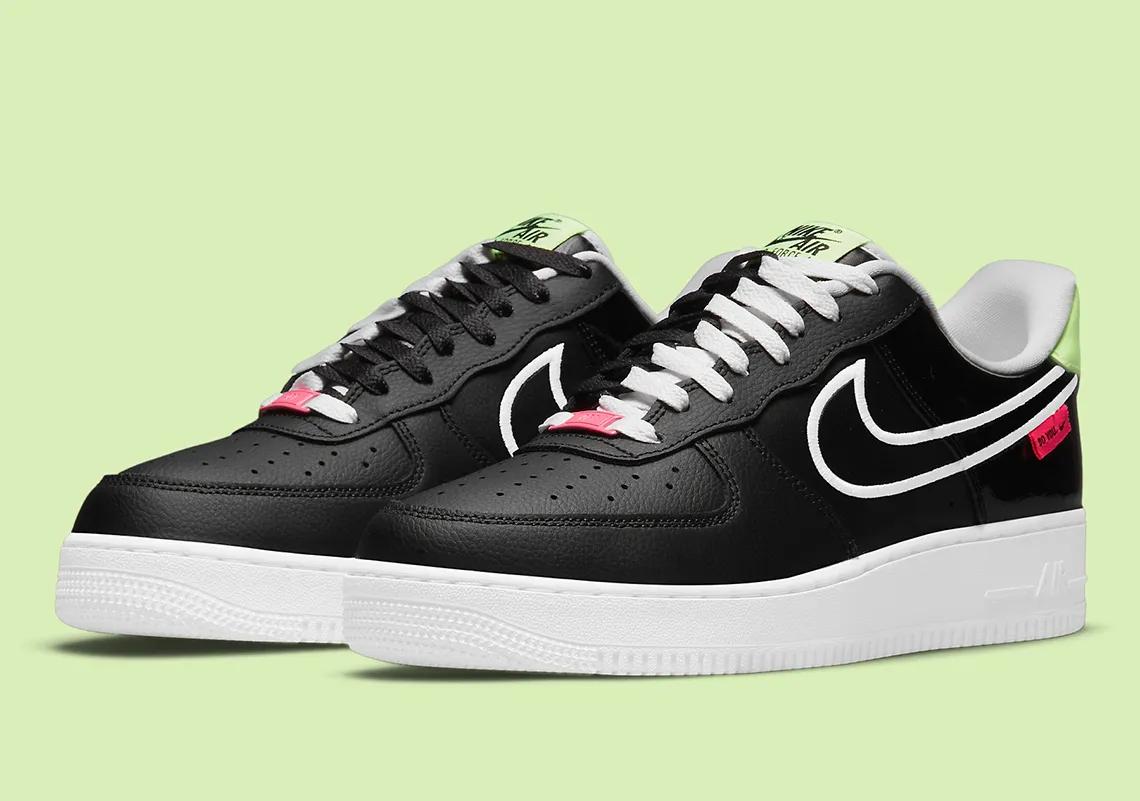
The Nike Air Force 1 Echoes The “Do You” Mantra - Sneaker News

brande.indah.link Similar to “Just Do It,” Nike’s latest slogan — “Do You” — encourages a greater, growing audience. But unlike the aforeme...

Popular Posts