Rechercher dans ce blog

Showing posts with label Huawei. Show all posts

Friday, November 13, 2020

The Biden Administration Needs a Fresh Approach to Huawei and 5G - Foreign Policy

brande.indah.link

China’s growing clout in 5G telecommunications and other digital technologies, much of it achieved through unfair competition, presents many risks to democracies, including espionage and the spread of disinformation. But the penetration of Western markets by companies that are instruments of an authoritarian state is only one of the risks in our connected and data-driven world. Digital technologies, for all their benefits to society, present risks no matter who owns or operates them—even if the risks are compounded when companies are influenced by authoritarian governments.

On all these risks, U.S. policy falls short: Despite the United States’ leadership in the global digital economy, Washington lacks a vision for governing digital risk even as evidence mounts that the laissez-faire experiment of outsourcing this responsibility to a handful of profit-maximizing technology giants has failed. Some U.S. states have attempted to fill the policy vacuum, with California standing out for its consumer privacy and Internet of Things security laws. But fragmented action by individual states is no substitute for coherent national leadership. Only with a strong national set of digital policies—which should be high on the agenda of President-elect Joe Biden’s administration—can the United States manage the growing risks to society and to national security emanating from the sector.

By now, Americans have learned that market forces alone will not produce the incentives for the private sector to care enough about digital risks. In 2017, for example, the credit rating company Equifax had such lax security in place on its web servers that the Chinese military allegedly exploited an obvious vulnerability to steal the intimate financial details of nearly 150 million Americans. In 2016, Facebook failed to act against Russian interference in the U.S. presidential election, spent the following year denying and obfuscating that fact, and since then has played—or claims to be playing—whack-a-mole against the many propaganda and hate campaigns being waged against liberal democracy on its platform, including the conspiracy theories currently being spread on Facebook about the 2020 U.S. presidential election. Facebook was also charged with misleading customers about its privacy practices by the Federal Trade Commission and paid a $5 billion penalty to settle the charges. And for most of the past decade, Silicon Valley executives embraced capital from and partnerships with Chinese investors and companies, with scant regard for how the Chinese government might abuse these relationships to access the crown jewels of U.S. innovation.
Other countries take a different approach to digital risks. Chinese regulation prioritizes the state’s interests—and although details remain thin, Beijing’s recently announced Global Data Security Initiative is likely to serve the interests of the Chinese Communist Party above all else. The European tradition, with its emphasis on fundamental individual rights and the rule of law, has far more in common with that of the United States. That said, European regulators tend to be much quicker than their U.S. counterparts to intervene in the marketplace. Europe has pursued an active regulatory and enforcement agenda, including the General Data Protection Regulation, the proposed ePrivacy Regulation, the EU Cybersecurity Act, and antitrust action aimed at quasi-monopolistic U.S. tech companies.

The shortcomings of U.S. digital policy have been especially obvious in Washington’s decade-plus effort to stymie the global ambitions of Chinese telecommunications infrastructure providers such as Huawei and ZTE. Already in 2011, the U.S. House of Representatives’ intelligence committee initiated a bipartisan investigation into the two companies. In a 2012 report, the committee warned that “Huawei’s and ZTE’s provision of equipment to U.S. critical infrastructure could undermine core U.S. national-security interests.”

Despite these warnings, Huawei and ZTE managed to penetrate the U.S. telecommunications market. As of 2019, according to data from the Rural Wireless Association, which represents rural internet service providers, up to one-quarter of its members have purchased equipment from either Huawei or ZTE—mainly because their products are far less expensive than their competitors’. “[W]ith nothing to tell us not to do it we chose them,” said John Nettles, the president of the Alabama-based Pine Belt Communications, in a filing with the Federal Communications Commission.

With such laxity at home, it’s no surprise that U.S. attempts to persuade allies to stop doing business with Huawei and other Chinese technology companies have faced stiff headwinds—even if allied governments generally agree on the strategic importance of the 5G network and understand the risk that a foreign government might compel a company under its jurisdiction to conduct surveillance and other cyberoperations on its behalf.

But many allies have a different threat perception of China, often informed by their own strategic interests. This leads them to different conclusions about the risks, benefits, and acceptable trade-offs. Is avoiding the risk of surveillance worth paying 20 or 30 percent more to a non-Chinese supplier? How confident can the purchaser be that non-Chinese equipment would be significantly more secure?

Without a yardstick to measure how the risks that come with Chinese equipment compare to those of other suppliers’, Washington is left with the difficult task of persuading allies to adopt the U.S. threat perception of China—a perception that reflects unique strategic, geographic, cultural, historical, and economic factors. Washington’s complex relationship with Beijing is marked by deep economic interdependence and unapologetic nationalism on both sides, against a backdrop of U.S. security commitments in Asia and a history of past conflict, including costly wars in which the two countries fought each other—in Korea and Vietnam.

Many allies see things differently. French President Emmanuel Macron said in August after meeting with Chinese Foreign Minister Wang Yi that France would not ban Huawei. (French regulatory authorities have announced licensing and other restrictions.) Germany is torn, with German parliamentarians pushing for an outright ban, Deutsche Telekom pressing ahead on a rollout of basic 5G services using Huawei technology in Germany this year, and Chancellor Angela Merkel delaying a proposed IT security law that would restrict—but not ban—Huawei.

In Britain, Huawei equipment has operated since at least 2005—at first unrestricted and then, beginning in 2010, under the ostensible supervision of a Huawei-owned Cyber Security Evaluation Centre. The U.K. instituted a partial ban of Huawei 5G technology in 2019 and expanded it in 2020 to ban the purchase of Huawei equipment beginning next year and to require all existing Huawei equipment to be ripped out by 2027. Several Eastern European countries have also endorsed Washington’s preference for a hard ban.

The incoming administration of U.S. President-elect Joe Biden should pivot away from Washington’s game of whack-a-mole against Huawei and other Chinese technology companies and develop a comprehensive digital risk strategy instead. In the case of 5G, this means supporting research and development, creating incentives for carriers to bring state-of-the-art connectivity to rural and underserved communities, and supporting competition all across the sector. It means pushing ahead with a federal data protection law, similar to those that have been enacted in Europe, that establishes privacy and security obligations for companies handling personal data, regardless of a company’s nationality. It also means defining legal liability and penalties for grossly negligent security practices across the entire spectrum of technology products and services, from app developers to infrastructure providers.

Some of this was tentatively begun by the Trump administration, including its endorsement of digital risk principles in March 2019 and the administration’s National Strategy to Secure 5G a year later. On the other hand, a spate of actions targeting Chinese companies over recent months—such as the Clean Network initiative, expanded sanctions against Huawei, and the measures targeting TikTok and WeChat—have been mostly unilateral and focused only on China.

When and if the Biden administration moves forward, it must do so in cooperation with allies in Europe, Asia, and elsewhere. More unilateral action would deepen the global leadership vacuum that China is well positioned to fill. The chances for cooperation are good, now that the Europeans are increasingly attuned to the elevated risk that Huawei and other Chinese companies pose to European data protection norms. This coincides with a shift toward a more critical view of China in much of Europe over the past half-decade, especially when it comes to trade, the environment, and human rights. There is an opportunity here to forge consensus on multilateral approaches to managing digital risks, including those associated with China, while managing inevitable differences.

That will require Washington, under the incoming administration of President-elect Joe Biden, to give up its penchant for unilateralism and be responsive to allies’ different risk profiles and exposure to China. After all, the end goal of U.S. policy in the digital arena should be to reduce global risk, rather than to alienate allies.

The Link Lonk


November 14, 2020 at 02:20AM
https://ift.tt/3njQBlW

The Biden Administration Needs a Fresh Approach to Huawei and 5G - Foreign Policy

https://ift.tt/3eIwkCL
Huawei

Huawei MateBook X (2020) review - TechRadar

brande.indah.link

Two-minute review

The Huawei MateBook X (2020) is a brilliant thin and light laptop from a company that’s likely best known for making smartphones, and falling out with the US government.

However, it's also been slowly and steadily building up its reputation in the laptop market, with its MateBook lineup of laptops proving to be decent Apple alternatives, minus the high price tag. With the excellent Huawei MateBook X (2020), the company has once again shown that it should be a brand to be reckoned in this market.

Why? First of all, the MateBook X (2020) is a stylish laptop that’s thin, light – weighing just 1kg – and easy to carry around. While there is certainly a nod to Apple in terms of its design, Huawei is forging its own identity, so the MateBook X (2020) doesn’t feel quite so much of a MacBook knockoff as its predecessors.

If there's one design feature we’re still not too keen on, it's the placement of the webcam. It sits in the keyboard, popping up with a quick tap of a button. However, its low position means the person at the other end will see you from a pretty unflattering angle – although, it has at least enabled Huawei to keep the bezels that surround the MateBook X (2020)’s screen impressively thin.

Huawei MateBook X (2020)

(Image credit: Future)

This style doesn't come cheap, though, with prices for the MateBook X (2020) starting at £1,099 / €1,599 (around $1,900/AU$2,600) for a model with a 10th-generation Intel Core i5 processor and 16GB of RAM. That’s a high asking price, one that will put off many people. However, considering the build quality and performance on offer here, we think it’s pretty fair.

Speaking of performance, the Huawei MateBook X (2020) does an excellent job at keeping up with pretty much any task you throw its way. Windows 10 feels fast and responsive, and for day-to-day usage, this machine is quick and capable.

Battery life is another highlight; it lasted 9 hours and 30 minutes in our tests. It will easily last a full work or school day. With its fast charger, even if you do need to top up the battery, you won’t need to plug in the MateBook X (2020) for long – around 30 minutes will have the battery life back to 50%.

Overall, then, the Huawei MateBook X (2020) is a fantastic thin and light laptop at a super-competitive price – a laptop that will further cement Huawei’s reputation as a laptop-maker to keep an eye on. It’s just a shame about the webcam placement.

Spec sheet

Here is the Huawei MateBook X (2020) configuration sent to TechRadar for review: 

CPU: 1.6GHz Intel Core i5-10210U (4-core, 6MB Intel Smart cache, up to 4.2GHz with Turbo Boost)
Graphics: Intel UHD Graphics
RAM: 16GB LPDDR3 (2,133MHz)
Screen: 13-inch 2K (3,000 x 2,000) touch panel
Storage: 512GB SSD (PCIe, NVMe, M.2)
Ports: 2 x USB-C, combi audio jack
Connectivity: 802.11a/b/g/n/ac/ax, Bluetooth 5.0
Camera: 720p
Weight: 2.2 pounds (1kg)
Size: 11.2 x 8.14 x 0.54 inches (284.4 x 206.7 x 13.6 mm; W x D x H)

Price and availability

Huawei is known for producing rather slick devices that come in at more affordable prices than its rivals. With the MateBook X (2020), the company is offering a stylish thin and light laptop for a starting price of £1,099.99 / €1,599 (around $1,900/AU$2,600).

For this money you get an Intel Core i5 processor, 16GB of RAM and 512GB of SSD storage. This puts it at around the same price as the MacBook Air (2020), which costs $1,299 / £1,299 / AU$1,999 for similar specs (but with only 8GB of RAM).

The MateBook X (2020)'s price is also in the same ballpark as the LG Gram 14 (2020), another thin and light laptop.

A version with a more powerful Intel Core i7 processor is available, and that costs £1,399 / €1,799 (around $2,100, AU$3,000).

Perhaps it’s a sign of Huawei’s growing confidence that it has chosen not to undercut the MateBook X (2020)'s competition to such a significant degree – but it remains expensive, so it will have to really impress to prove that it has what it takes to keep up with its premium, more well-established rivals.

After all, this is quite a bit more expensive than Apple’s new MacBook Air (2020), whose prices start at $999 / £999 / AU$1,599.

One last note about availability: it’s still difficult to buy Huawei products in the US, so if you're Stateside and want to purchase this device, your only option may be to import it.

Huawei MateBook X (2020)

(Image credit: Future)

Design

We have to hand it to Huawei: with the MateBook X (2020), the company has created a superbly designed laptop. It's an expensive device, and it looks and feels it. Available in two colors, Silver Frost (reviewed here) and Emerald Green, its 11.2 x 8.14 x 0.54-inch dimensions and 1kg weight combine to present a laptop that looks  understated and professional.

It’s certainly a device that feels easy to carry around, while not being too fragile that you’d worry about taking it out and about.

In terms of styling, the Apple influence can still very much be seen – but we’d imagine the Emerald Green version feels a little removed from it. Anyway, you wouldn't call this a cheap MacBook knockoff, because it’s actually more expensive than many MacBook models. A strange state of affairs, to be honest.

Huawei MateBook X (2020)

(Image credit: Future)

The compromise of having a thin laptop usually comes by way of a reduced number of ports – and, sadly, that proves true here. The MateBook X (2020) has just two USB-C ports (one on each side), and an audio jack for headsets. If you have any older USB devices that you want to use with this laptop, you’ll need an adapter.

On opening up the laptop, you get to appreciate just how thin it is. The 13-inch screen has impressively narrow bezels. The screen itself is superb, too, with a ‘2K’ 3,000 x 2,000 resolution and a 3:2 aspect ratio. This means it’s taller than a widescreen 16:9 display, making it handy for word processing and spreadsheets, and reading websites. The extra height makes a noticeable difference, in a good way, and this is true of other laptops and tablets with similar displays, such as the Microsoft Surface Pro 7.

With a contrast ratio of 1,500:1 and a maximum brightness of 450 nits, the Huawei MateBook X (2020)'s screen offers decent image quality. And with 100% sRGB color gamut support, it should be capable of displaying some truly stunning images. We found it works well in direct sunlight (there’s even a light sensor to adjust screen brightness depending on the ambient lighting where you’re using it), and contrast is good: blacks are nice and dark, with light colors offering decent brightness.

The bezels around the screen are impressively thin due to the lack of a webcam above the screen. Instead, it’s built into the keyboard, between the F6 and F7 keys. It looks like a standard keyboard key, with a camera logo – but press it, and the camera pops up. It's an elegant solution (and something we’ve seen in other Huawei laptops, too), and also security-conscious, since pressing the webcam back down into the keyboard effectively covers up the camera. 

However, we do have to highlight how unflattering this webcam can be. It’s aimed upwards at such an angle that even people with the most chiseled of chins is likely to  feel pretty self-conscious. Many people will end up wishing Huawei had just left the webcam in the traditional spot above the screen, even if this would have resulted in a slightly thicker top bezel.

Huawei MateBook X (2020)

(Image credit: Future)

The rest of the keyboard is perfectly fine, with a size and travel that’s similar to a MacBook. There’s no backlighting of the keys, so in dark environments you may struggle to make out the keys you’re pressing.

The large trackpad is responsive, and runs right to the bottom edge of the laptop. It does a fine job of controlling Windows 10. There’s also a fingerprint scanner just above the keyboard, which doubles as a power button. As is the case with other Huawei laptops, it has a clever feature where it scans your fingerprint when you press it to turn on the laptop, then stores your fingerprint to log into Windows 10, so you don’t have to tap the button twice. In our experience it worked well, reliably logging us in throughout our time with the laptop.

Huawei MateBook X (2020)

(Image credit: Future)

Benchmarks

Here’s how the Huawei MateBook X (2020) performed in our suite of benchmark tests:

Cinebench R20 CPU:  999 points
3DMark Time Spy: 291; Fire Strike: 742; Night Raid: 3,334
GeekBench 5: 1,283 (single-core); 7,408 (multi-core)
PCMark 10 (Home Test): 3,203 points 
PCMark 10 Battery Life: 8 hours 55 minutes 
Battery Life (TechRadar movie test): 9 hours 36 minutes

Performance

Overall, the Huawei MateBook X (2020) performs very well. Windows 10 feels fast and responsive, and using it daily for general use, we had absolutely no complaints. Huawei’s inclusion of the 10th-generation of Intel processors is a good choice, bringing performance gains to this thin and light laptop over previous models.

The Intel Core i5-10210U processor that features in the review model is a quad-core processor with a base frequency of 1.6GHz and a boost of 4.2GHz. Paired with the 16GB of RAM, it delivers an excellent Windows 10 experience, taking multitasking in its stride. 

However, we did notice that the processor appeared to be throttling during intensive tasks and benchmarks. This is likely due to the Huawei MateBook X (2020)'s fanless design. The lack of fans means this laptop is virtually silent, and while that's a positive, it also means the MateBook X (2020) struggles to keep its cool. As a result, when the processor is overworked, the laptop becomes hot – and when it reaches a certain temperature, the CPU's performance is throttled, thus reducing performance and heat.

Unfortunately, this is the price you pay for the combination of thin and light, fanless design and decent CPU. The good news is that for standard day-to-day tasks, such as browsing the web and word processing, there will be no issue – and the silent, thin and light design will be worth it. But for demanding tasks that require sustained CPU firepower, you may find performance is hampered due to throttling.

In other areas, however, we remain impressed. The 13-inch panel's 3,000 x 2,000 resolution results in very good pixel density, and by default Windows 10 scales at 225%. You can lower this, though, to give yourself more room to work: we used it at 150%, shrinking text and graphics to allow more room, but without things becoming uncomfortable.

Huawei MateBook X (2020)

(Image credit: Future)

Our benchmarks show that the Huawei MateBook X (2020) beats the MacBook Air 2020, although the latter includes a low-spec Core i3 processor. The fact that the Huawei MateBook X (2020) comes with a quad-core CPU, compared to the entry-level MacBook Air’s dual-core unit, resulted in the MateBook X dominating in the multi-core tests. Featuring double the RAM included in the MacBook Air, the Huawei MateBook X (2020) not only takes some of its design cues from Apple, but it takes the lead in many respects – although keep in mind this is a more pricey machine.

Overall, the Huawei MateBook X (2020) performs really well. But don’t expect it to be able to crunch through complex video-editing tasks or play AAA games. As a productivity machine, however, it impressed.

Also, those who own a compatible Huawei phone can use the Huawei Share feature to wirelessly connect their mobile to the laptop (this is achieved via an NFC chip inside the body of the laptop, so it’s very easy to use).

On connecting the phone, you’ll be able to open apps on both devices, use video-calling features, and drag-and-drop files to and from the smartphone and laptop. It works well, and is a welcome extra feature. We’d love to see it work with handsets from different manufacturers, but we can understand the reasons that Huawei wants to limit the functionality to its own devices. If you already own a Huawei handset, consider this a big plus.

Huawei MateBook X (2020)

(Image credit: Future)

Battery life

We were very pleased with the overall performance of the Huawei MateBook X (2020), including the laptop's battery life.

In our video benchmark, where we loop a 1080p video with the screen at 50% brightness, the Huawei MateBook X (2020) lasted a very respectable 9 hours and 30 minutes, easily blowing past the MacBook Air’s 8 hours. Apple usually has the edge when it comes to battery life, but we’re loving seeing Windows 10 laptops such as the Huawei MateBook X (2020) benefit from the more efficient 10th-generation Intel chips, which allows them to deliver improved battery performance.

In the PCMark 10 battery life test, which replicates more intensive workloads such as document creation and video calls, the laptop also impressed, lasting just shy of 9 hours.

We found we could use the Huawei MateBook X (2020) for a full work day without needing to top it up, making this an extremely versatile laptop. If you do need to charge it, the included fast charger can restore around half of the battery in just 30 minutes. This means that when using the Huawei MateBook X (2020), you shouldn’t have to worry about running out of battery – which is a refreshing thing to say about a compact Windows 10 device.

Buy it if...

You want a thin and light laptop
The Huawei MateBook X (2020) is a nicely designed laptop, one that feels comfortable to carry around with you.

You want decent screen space
This laptop's high resolution and 3:2 aspect ratio work well together to provides an impressive amount of screen space in which to work, while keeping the overall size of the laptop down.

You don’t want to carry a charger
The Huawei MateBook X (2020)'s battery life is super-impressive. Sure, it doesn’t get anywhere near the 20-odd hours of some – very expensive – laptops, but it will easily see you through an entire workday.

Don't buy it if...

You make a lot of video calls
These days, that covers a huge number of us. The placement of the webcam really is unflattering, and may make you think twice about going on camera.

You want a budget laptop
Huawei equals cheap, right? Not in this case. This is an expensive laptop, but it does plenty to justify the price. If you're after a budget laptop, look elsewhere.

You’re a gamer
This laptop can’t play PC games – and even if it could, the 3:2 aspect ratio could cause issues. You should look elsewhere.

The Link Lonk


November 14, 2020 at 03:25AM
https://ift.tt/3pCpk0a

Huawei MateBook X (2020) review - TechRadar

https://ift.tt/3eIwkCL
Huawei

Huawei is expected to bring HarmonyOS to up 48 devices - Notebookcheck.net

brande.indah.link

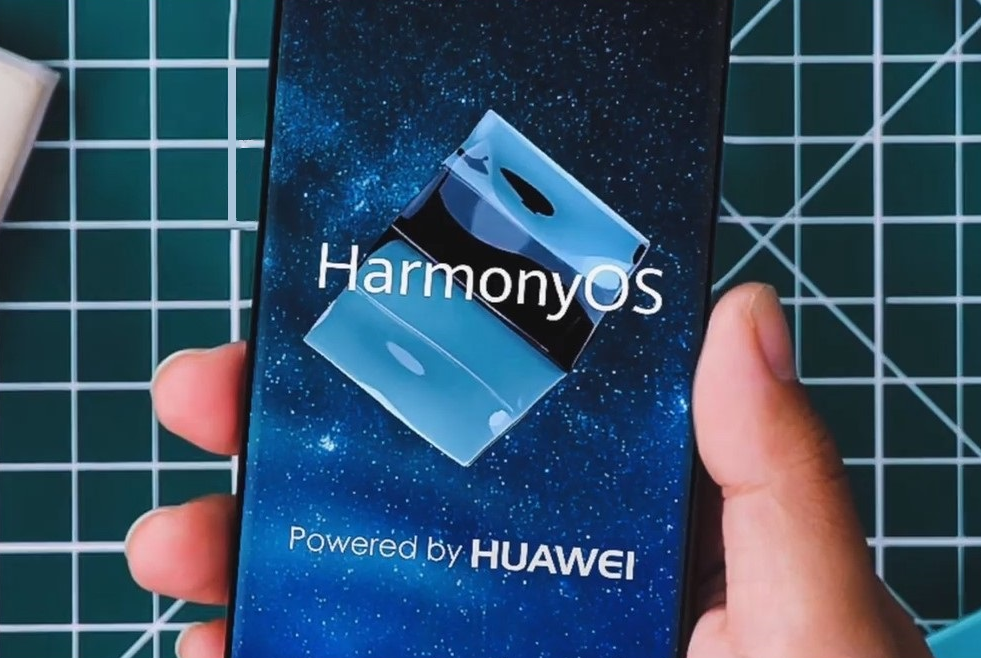
Huawei Central has based its list on several leaks, along with information delivered by Huawei executives. The website expects Huawei to prioritise HarmonyOS upgrades for devices that it released running Huawei Mobile Services (HMS). It seems to think that the Huawei Enjoy/Y series is out of contention for HarmonyOS, though.

The Link Lonk


November 14, 2020 at 03:43AM
https://ift.tt/3lIfQ17

Huawei is expected to bring HarmonyOS to up 48 devices - Notebookcheck.net

https://ift.tt/3eIwkCL
Huawei

Qualcomm receives U.S. permission to sell 4G chips to Huawei in exception to ban - Reuters UK

brande.indah.link
FILE PHOTO: A Qualcomm sign is seen at the third China International Import Expo (CIIE) in Shanghai, China November 5, 2020. REUTERS/Aly Song

(Reuters) - Qualcomm Inc QCOM.O on Friday received a license from the U.S. government to sell 4G mobile phone chips to China's Huawei Technologies Co Ltd, an exemption to U.S. trade restrictions imposed amid rising tensions with China.

“We received a license for a number of products, which includes some 4G products,” a Qualcomm spokeswoman told Reuters.

Qualcomm and all other American semiconductor companies were forced to stop selling to the Chinese technology firm in September after U.S. trade restrictions took effect.

The spokeswoman declined to comment on the specific 4G products Qualcomm can sell to Huawei but said they were related to mobile devices. Qualcomm has other license applications pending with the U.S. government, she said.

In the past Huawei was a relatively small chip customer for Qualcomm, which is the biggest supplier of mobile phone chips. Huawei used its own house-designed chips in its flagship handsets but used Qualcomm chips in lower-priced models.

Huawei’s potential to design its own chips was thwarted in September by U.S. trade restrictions that blocked its access to chip design software and fabrication tools. Industry analysts believe Huawei’s stockpile of chips purchased before the ban could run out early next year, crippling its smart phone business.

Bernstein analyst Stacy Rasgon said the Qualcomm license would have a “limited impact” because it only covers 4G chips while consumers are shifting to newer 5G devices. Rasgon said it is still unclear whether U.S. officials will grant Qualcomm licenses for 5G smart phone chips.

Representatives for Huawei and the U.S. Department of Commerce, which grants the licenses, did not immediately return requests for comment.

Other U.S. companies such as Micron Technology Inc MU.O were also stopped from selling to Huawei and have said they have applied for licenses. Intel Corp INTC.O has also said it has a license to sell to Huawei.

Reporting by Stephen Nellis in San Francisco; Editing by Leslie Adler

The Link Lonk


November 14, 2020 at 06:25AM
https://ift.tt/3f04h2p

Qualcomm receives U.S. permission to sell 4G chips to Huawei in exception to ban - Reuters UK

https://ift.tt/3eIwkCL
Huawei

Planned Guilty Plea Will Allow Chinese Professor Linked to Huawei to Return to China | New York Law Journal - Law.com

brande.indah.link
Professor Bo Mao departs the Eastern District courthouse in September. Photo: Mark Kauzlarich/BloombergProfessor Bo Mao. Photo: Mark Kauzlarich/Bloomberg

Prosecutors in the Eastern District of New York have reached an agreement to allow a Chinese professor accused of helping to steal intellectual property for the Chinese telecom giant Huawei to return to his home country, they revealed in court Thursday.

The Link Lonk


November 13, 2020 at 05:41AM
https://ift.tt/3ksYoMt

Planned Guilty Plea Will Allow Chinese Professor Linked to Huawei to Return to China | New York Law Journal - Law.com

https://ift.tt/3eIwkCL
Huawei

Thursday, November 12, 2020

Paid Content Eight EMUI 11 and HMS features that elevate new Huawei Mate 40 Series phones - CNET

brande.indah.link

So off the back of the recent Huawei Mate 40 Series launch event, we're digging into the big updates coming to the new phones through the EMUI 11 update. "Human-centred design" framed the pitch this year, aiming to improve many interactions and usage styles to help get things done, or have fun, in more meaningful ways.

emui-logo

Customisation

Huawei Mobile Services also now offers lots of personalisation, with theme packs available to make your phone more individual than ever. Be inspired by artists, literature and more to make your phone feel like home.

The AppGallery is also growing fast, with two million developers now registered into the ecosystem and 500 million monthly active users. The store is growing fast and getting easier by the day to find the apps that give you exactly what you're looking for.

Hands-free

The most obvious area here is the new Always-On Display (AOD) setup, which gives much greater personalisation than ever before. Custom choices on colours and shapes – even animated GIFs are welcome – while you can also leave yourself a nice message to see each time you pick up the device.

The new Eyes On Display system also means that just looking at your screen will bring it to life and the addition of Gesture Control means you can then wave, swipe or hold your hand over the phone to trigger various features. Scroll, swipe and even 'press' (just pretend to press, don't actually touch) to trigger interactions. So you can now read, watch, play, change volume and answer calls all without ever touching your phone.

Collaboration

One of the big strengths of Huawei hardware has been cross-device interactions through Huawei Share. Under past versions, the ability to use your smartphone directly on your laptop screen has been an impressive feature, or to share your laptop screen to your phone. Drag-and-drop file sharing has also been a seamless feature users have enjoyed.

With EMUI 11 that gets even stronger, with the arrival of a Multi-screen Collaboration feature that lets you open up to three different smartphone apps in separate windows on your PC desktop. A great way to combine the power of desktop apps with the comfort of your favourite apps from your smartphone.

A more desktop-like experience is also available for EMUI 11 phones with Smart Multi-Window, which lets you run windows of different apps directly on your handset. Watch a video that hovers over your web browser, for example, or take notes while you catch up on email.

A lot of added convenience and usefulness thanks to the EMUI 11 updates.

Petal Search

With the launch of Petal Search, HMS is now levelling up global Huawei users' digital experience. Huawei has invested heavily in its official search engine, which now operates in over 170 countries and regions around the world, with support for over 50 languages.

Search news, video, images, shopping, travel, business details and perform plenty of simple lookups like the weather, exchange rates and the always handy calculator functions. Local information is always a big target for search and that's been given a greater emphasis in the latest version of Petal Search.

The Petal Search updates also bring a cleaner, more visual interface, along with some clever new AI search tricks. This includes image-based search – take a photo of a recipe and Petal Search will hunt down related information. Take a photo of a landmark and find out more about it.

Find out more about what's new with Petal Search here.

Petal Maps

Huawei's own map application has been launched in more than 140 countries and regions, with live transit information for more major cities around the world. You can also put those Huawei Mate 40 Series gesture controls to switch between navigation view and map overview by simply using 'air press' towards the screen with their palms. These smart interactions significantly enhance the ease of travel. Petal Maps currently supports voice navigation including English, French, German, Spanish, Italian and Mandarin.

HUAWEI Docs

Huawei Docs is also now available in over 100 countries and regions, allowing viewing and editing of over 50 document formats, including PDF, PPT and DOC. Your documents will sync in real-time via the cloud to keep everything up to date in all the places you need it. Edit on the go and present on your laptop, without skipping a beat.

Security and privacy

EMUI bakes in a lot more security features than previously too. A lot of this focuses on improving privacy by default. One of the simplest but most elegant ways is to strip personal information from any photo shared from the device. Location, time, and other details will be removed by default so you can share images knowing they won't share more than the great picture you captured.

On the more advanced end, a new AI Private View feature will use facial recognition to only show you personal information in notifications and messages. If it notices other faces within view it will keep details hidden. This feature also holds private notifications back when you are sharing your phone screen to another device to ensure you aren't accidentally revealing private information when running a presentation, for example.

Long-term performance

Ultimately, these days we want our phones to have staying power. So with the Huawei Mate 40 Pro, the Kirin 9000 processor and EMUI 11, Huawei is promoting a 36 month lifetime for new phones to be running at their best.

In testing, Huawei has seen independent data suggest battery life will only drop by 2.5% over 36 months, which is an impressive marriage of hardware and software working together to maximise the long-term life of a phone.

Our smartphones are an investment, so it's always nice to hear this kind of assurance that we can stick with the device over the long haul.

Along with launching on the Huawei Mate 40 Series devices, the latest EMUI 11 and HMS updates will also roll out to Huawei P40 Series handsets (except the P40 lite) and Huawei Mate 30 Series phones soon.

The Link Lonk


November 13, 2020 at 01:18AM
https://ift.tt/2IvxdDQ

Paid Content Eight EMUI 11 and HMS features that elevate new Huawei Mate 40 Series phones - CNET

https://ift.tt/3eIwkCL
Huawei

Huawei Matebook X 2020 - CNET - CNET

brande.indah.link

This is paid content. It was written and produced by Studio 61 of CBS Interactive’s marketing unit in collaboration with the sponsor.

Sleek, Ultra slim notebook that packs a punch!

Listen

- 00:01
The Link Lonk


November 13, 2020 at 03:26AM
https://ift.tt/2H0oxoi

Huawei Matebook X 2020 - CNET - CNET

https://ift.tt/3eIwkCL
Huawei

Huawei Mate X2 coming soon? 3C listing surfaces, revealing 66W fast charging - Pocket-lint

brande.indah.link

(Pocket-lint) - Details have surfaced about the Huawei Mate X2, as it recently popped up on the website of 3C - a certification body in China - with the codename "Huawei TET-AN00 / AN10 smartphone".

91mobiles spotted the device's listing and has reported it's the Huawei Mate X2. It'll feature 66W fast wired charging, meaning it should charge much faster than the existing competition, including Samsung's Galaxy Z Fold 2, which supports 25W fast wired charging. There were no details about the Huawei Mate X2's wireless charging capabilities in the listing, but given the Galaxy Z Fold 2 supports wireless charging, we suspect Huawei's foldable will, too.

The Huawei Mate X2's 3C listing did reportedly confirm, however, that the phone will be 5G capable, something previously known.

In fact, the Huawei Mate X2 has been rumoured for a while and may even arrive either by the end of this year or in early 2021. It's expected to have two displays - again, much like the Galaxy Z Fold 2. It will have an 8.3-inch main display with a 120Hz refresh rate, according to reports, and it'll have four rear cameras.

In terms of internal hardware, Huawei's Kirin 9000 SoC is thought to power this ultra-premium handset, which will likely launch at an expensive price point.

Writing by Maggie Tillman.

The Link Lonk


November 12, 2020 at 02:03PM
https://ift.tt/35le67W

Huawei Mate X2 coming soon? 3C listing surfaces, revealing 66W fast charging - Pocket-lint

https://ift.tt/3eIwkCL
Huawei

Huawei commences EMUI 11 rollout for 10 devices as HarmonyOS beta for smartphones set to debut in December - Notebookcheck.net

brande.indah.link

Please share our article, every link counts!

Alex Alderson, 2020-11-11 (Update: 2020-11-11)

Alex Alderson

Prior to writing and translating for Notebookcheck, I worked for various companies including Apple and Neowin. I have a BA in International History and Politics from the University of Leeds, which I have since converted to a Law Degree. Happy to chat on Twitter or Notebookchat.

The Link Lonk


November 11, 2020 at 07:58PM
https://ift.tt/3eVVVsU

Huawei commences EMUI 11 rollout for 10 devices as HarmonyOS beta for smartphones set to debut in December - Notebookcheck.net

https://ift.tt/3eIwkCL
Huawei

Wednesday, November 11, 2020

Huawei and the Fight for 5G - Wealth Daily

brande.indah.link

The race among 5G providers isn’t just domestic; it’s international. Thankfully, we've established our own vendors in the U.S., but in other highly populated nations, Huawei (SZ: 002502) is a known name.

Huawei is a large telecom company that manufactures phones for large countries like the UK and Brazil.

Founded by Ren Zhengfei, Huawei being the tech giant that it is has made Zhengfei quite the billionaire.

Zhengfei founded Huawei about 33 years ago after he served as an engineer in the Chinese military. Today the company takes in over $100 billion in annual revenue. We’ll get into Zhengfei more later.

The first round of 5G phones are here, but are they vulnerable to 5G networks across the world?

Because of companies like Huawei and the track record they have, the screen staring back at us could have much more than wires and chips behind it.

Over the years, even reaching back to the early years of the Obama administration, allegations have been made against Huawei.

All point to the possibility of the company using advanced technology, seeping through the casual use of our mobile phones, to get deep into U.S. government infrastructure.

Many resources supplied by Huawei are suspected to be subject to exploitation. The company has denied this just as much as it's been accused.

As a nation, we are going to grow more reliant on 5G; connectivity is key in a world that relies on productivity regardless of distance.

Huawei CEO

Law and Order

Since 2012, Huawei tech has been investigated. In a 2012 report, suspicions of threats to national security via Huawei and another Chinese telecom company, ZTE (OTC: ZTCOY), were brought to light.

The U.S. Department of Justice recently charged Huawei with racketeering and conspiring to sell trade secrets earlier this year.

Refusal to adhere to that U.S. investigation didn’t help Huawei’s cause. Intellectual property was at stake on both the U.S.'s side and Huawei’s side.

Huawei released a statement stating the charges made were based on decades-old allegations and a clear attack on the reputation of the company. “Unfounded and unfair” were the words used.

It doesn’t help that the CFO of Huawei, Meng Wanzhou, was charged for evasion and bank fraud by the U.S. government, arrested in Canada in December 2018, and is facing possible extradition to the U.S.

Wanzhou is also the daughter of Ren Zhengfei.

The charges could highly damage Huawei’s reputation.

A damaged reputation leads to inevitably damaged revenue.

Both ZTE and Huawei failed to submit anything to tame the tensions, causing U.S. Intelligence Committee Chairman Mike Rogers to air his fears of American phones and other tech granting access to Huawei's espionage.

Allegations of assisting the Iranian government and conducting business deals with North Korea have added more tumult to the already rocky relationship between the U.S. and Huawei.

The U.S. has also thrown three rounds of sanctions at Huawei, blacklisting it all the way back in May 2019.

New Alternatives

The vote to ban U.S. corporations from any sort of business with Huawei was unanimous, with vendors such as Ericsson (NASDAQ: ERIC), Nokia (NYSE: NOK), and Apple (NASDAQ: AAPL) preferred.

As of July, Huawei ended Samsung’s (KRX: 005930) long reign as the world’s largest phone maker, shipping more phones worldwide than any other vendor.

For the first time in nine years, the dominant phone vendor was not Apple or Samsung. Huawei beat this record in the second quarter of 2020, shipping out over 55.8 million devices compared to Samsung’s close 53.7 million.

Huawei supplied Brazil for over 22 years... until the U.S. decided to change things up and sign a memorandum to block Huawei from the 200 million-strong population.

But how would such a populated country find an alternative to a long-term supplier?

The U.S. came prepared.

With $1 billion offered to Brazil, the U.S. has proven the severity of its cause against Huawei monopolizing the 5G world.

Robert O’Brien, U.S. National Security Adviser, named innovation in 5G and energy as a main focus in the memorandum. The intent is to “identify potential opportunities” for Brazil, though cybersecurity is on the line.

Of course, a spokesperson for Huawei contradicts these matters, claiming that in its 30 years of service to over 170 countries there have never been any major incidents regarding cybersecurity.

That statement may have held up if it weren’t for multiple countries once supplied by Huawei beginning to block the company.

Sweden already completely banned Huawei. Ericsson, a large competitor of Huawei, is based in Sweden.

The United Kingdom is in talks to phase out Huawei in favor of Nokia powering its 5G networks instead.

As of late August, India plans to quietly remove Huawei equipment from its networks, though this choice relates more to the tensions at the border that India and China share.

Seventy percent of Huawei’s sales DO come from mainland China, but 27% of its overseas shipments fell thanks to the U.S.’s aggressive restrictions.

Recently, both Poland and Romania have chosen to exclude Huawei, with Poland drafting new cybersecurity legislation back in September. The two countries are also contributing to a proposal that the EU ban Huawei altogether.

On the first of November, Romanian Prime Minister Ludovic Orban made his intent to part ways with Huawei very clear. Romania’s security qualifications are not met through Huawei, so it plans to choose a company that “poses no threat to national security.”

eu flag

A Tough Fight

The heavy loads of negative press would be a major blow to any company’s reputation, but Huawei is determined now more than ever to thrive in the 5G world.

Despite the multiple (and pending) bans, Huawei is refusing to go down without a fight. The company launched a new flagship phone that boasts the world’s first 5-nanometer 5G chipset.

The chipset is said to support three generations of smartphones, intended to outlive the conventional 5G smartphone in the U.S. according to Ma Jihua, a close Huawei follower.

Richard Yu, the CEO of Huawei’s consumer division, claims the chipset has a 30% efficiency over Apple’s A13. Yu also claims the smartphones support the fastest 5G speeds, 2.6–6.8 times faster than the average 5G phone.

Smartphones in the Chinese market will increase due to this innovation — the home field advantage indeed a large factor.

The sympathy card is one way to play consumer pathos, and Zhengfei has taken a hit in net worth thanks to the multiple sanctions against Huawei.

His wealth shrank 10% in the past year because of the U.S. government’s intervention in his company's international business affairs.

In 2019, Zhengfei opined to the BBC about working 16-hour shifts in the fight to keep Huawei alive.

Pathos card indeed: In 2019, Zhengfei claimed to still “have trust in the UK,” though even then, it was in talks to follow through on the phasing out plan it's enacting now.

The U.S. isn’t the only hurdle facing Huawei in the 5G race.

The 5G tug of war with the U.S. isn’t the only one Huawei is waging; its has competitors within mainland China that also pose an economic threat.

Though Huawei is the largest phone manufacturer in the world, one might argue it has too much focus on international affairs.

But why shouldn't it? It’s a lucrative business and shows a willingness to use diplomacy to accomplish its goals.

But Chinses companies, like Huawei's long-time rival Xiaomi (OTCMKTS: XIACF), now fill the gaps Huawei may have been able to fill.

Not only did Xiaomi grab market share in China, but it also grabbed it in Europe... where Huawei is trying to maintain dominance... where countries are drafting an EU-wide ban on Huawei.

In fact, Xiaomi saw an 88% jump in shipments to Europe when Huawei fell behind.

Amongst the iPhone releases, Xiaomi was the only company that recorded growth in the current quarter.

The second-largest cellphone maker in China is Oppo (NYSEARCA:IPO), which is also taking advantage of Huawei falling behind in Europe.

The fastest-growing market in Europe is Western Europe, where Oppo’s sales have tripled within the past year.

Oppo recently signed a deal with Deutsche Telekom to sell 5G smartphones in Germany, the Netherlands, and Poland.

Remember how Poland is campaigning for Huawei to be banned from the EU?

Huawei has seen a 16% market share plunge in Europe — now we can see why.

While many countries view Huawei as a threat, it also faces many threats itself. With a CEO who has a military mind, it will likely be a long fight to the top as Huawei goes for the 5G gold.

The Link Lonk


November 11, 2020 at 09:38PM
https://ift.tt/2GPv8Sf

Huawei and the Fight for 5G - Wealth Daily

https://ift.tt/3eIwkCL
Huawei

U.S. aide warns Brazil, without evidence, of Huawei 5G 'Big Brother' surveillance - WNWN-FM

brande.indah.link

BRASILIA (Reuters) - A U.S. official said on Wednesday that Chinese surveillance of the world through 5G technology was like Big Brother in George Orwell's novel 1984, as he urged Brazilian companies not to buy equipment from China's Huawei Technologies Co Ltd.

Keith Krach, U.S. under secretary of state for economic growth, energy and the environment, said multinational companies will increasingly stay away from countries that do not have safe civilian networks and risk their data and intellectual property being stolen.

"This story about the Chinese Communist party ... it is a real and urgent threat to democracies like ours around the world," Krach said in a speech on economic security at Brazil's Getulio Vargas Foundation think tank.

"They are trying to export dictator out of the box with their surveillance tools. It is the extension of that Orwellian 1984 Big Brother surveillance," he said, without providing evidence.

Brazil's right-wing government announced its support on Monday for the U.S. proposal for a Clean Network, a global digital alliance that excludes technology that Washington sees as manipulated by China.

Brazil became the 50th nation to sign on to the initiative, which now includes 170 telephone firms and many of the world's leading high-tech companies.

U.S. Secretary of State Mike Pompeo said on Tuesday that "27 of 30 NATO allies, 31 of 37 OECD members, 26 of 27 EU members, and 11 of 12 of the Three Seas nations" have joined.

Krach met in Brasilia with President Jair Bolsonaro's national security advisor, retired army general Augusto Heleno to discuss excluding Huawei from Brazil's 5G market, a decision the Brazilian government is considering before spectrum concessions are auctioned next year to local telcos.

Brazil's top carriers are already testing Huawei equipment for 5G and favor keeping their purchase options open.

Huawei has repeatedly denied being a security risk. It has said it abides by Brazil's laws and is available for tests and clarifications that authorities considered necessary.

(Reporting by Anthony Boadle; Editing by Bernadette Baum)

The Link Lonk


November 12, 2020 at 01:12AM
https://ift.tt/3lpLyzJ

U.S. aide warns Brazil, without evidence, of Huawei 5G 'Big Brother' surveillance - WNWN-FM

https://ift.tt/3eIwkCL
Huawei

The Huawei Mate 40 Pro has an amazing camera and a big apps problem - British GQ

brande.indah.link

If you're anything like us, then by far the most important feature you look for in a new smartphone is its camera. Much to the chagrin of 5G networks and wireless charging accessory makers, there's pretty much no contest here. Why? As good as cameraphones have gotten these days, if you pick up your phone right now and scroll through your photos there's probably plenty you'd change. Maybe that image of you and your mates is a little cramped. Or perhaps that nighttime landscape is lacking detail and sharpness. And what about video falling to pieces when your hands get shaky?

Enter the Huawei Mate 40 Pro. Despite being spoiled by superb smartphone cameras from the likes of the iPhone 12 and Pixel 5, we can categorically state that Huawei's latest superphone has the best camera we've seen this year, period. At £1,099 it's not cheap, but it's every inch the flagship you'd expect for the price, from its world-class camera and stunning build to incredibly fast charging and powerful innards. 

As with other Huawei-made smartphones, there is a catch here: the lack of Google Play Services, thanks to a US trade ban. This means several of your favourite apps and Android features either won't work properly or won't be available to download at all. Despite this dramatic shortcoming, the Mate 40 Pro could prove worth the sacrifice. It’s just that good. Don't just take our word for it though – let's dive a little deeper.

Photographic excellence

Flip the Mate 40 Pro around and the triple camera array, complete with laser autofocus module, immediately jumps out at you. Centred in the rear in a circular layout, it clearly means business.

In terms of setup, the Mate 40 Pro’s main camera features a gigantic 1/1.28 sensor combined with a 50MP resolution. What do all these numbers mean? Basically, this phone has a larger-than-normal sensor, which makes a big difference to its overall image quality, mainly because it can capture a greater amount of detail in low light with added dynamic range (more on that in a sec).

Next up is a 12MP camera, which uses a clever, periscope-like system to offer 5x optical zoom, bolstered by optical image stabilisation. The upshot of this is the ability to zoom into shots without things turning into a blurry, pixellated mess, coming in handy for taking pictures of performances or wildlife from further away.

Last, but by no means least, we have the brand-new 20MP ultra-wide camera, which lands with a f/1.8 aperture. Not only is this wide-angle camera packing in more megapixels than others we’ve seen in the past, but its large aperture also means it sucks in more light too – something that all wide-angle smartphone lenses have struggled with.

Still with us? Good. Much like the iPhone 12 Pro, there's a lot going on with the Mate 40 Pro's triple-lens camera and it's worth taking the time to explain why these fundamentals matter – they really do make for some stunning photos.

The proof is in the picture

As we already mentioned, the Mate 40 Pro's main 50MP sensor is massive – and it shows. This phone's ability to turn night into day is borderline miraculous. It manages to pick up details and colours in extremely challenging tests, such as my ill-advised walk through a spooky park playground during the Halloween weekend. 

Thanks to its second wide-angle lens, you can also capture wider scenes in low light without compromising on quality – a big deal for street and landscape photographers looking to squeeze more into their shots. I love architectural photography more than anything else, but, until now, my wide-angle shots have been limited to daytime use only. With the Mate 40 Pro’s light-sucking wide-angle lens though, a new world has just opened up for the way I take photos. 

This lens also really comes into its own with video, letting you capture wide shots in up to 4K 60fps with great dynamic range. Recording a video of your dog sprinting around the park, for example, will keep everything clear, without over-cranking the sky’s brightness to the point where you can’t make out a single cloud.

Things are just as good on the zoom front, with anything at 10x magnification or lower coming out crisp and detailed in bright to low light, with even 20-30x zoom shots being usable, depending on how picky you are. As with other smartphones, zoomed shots lose too much detail in truly dark conditions to be of much use, but that’s physics for you.

Finally, selfie fans will also be glad to hear that the Mate 40 Pro offers three levels of shots – 1x, 0.8x and wide – letting you swap from solo to group selfie modes in an instant, without having to awkwardly cram everyone together. Selfies are crisp and clear, picking up plenty of detail with accurate tones.

Everything else

We’re not trying to rush you here. We’ve spent the bulk of this review looking at the camera, because that’s the only thing worth tempting you away from an easier Google-filled life here.

On that note, here’s the bad stuff. While Huawei’s app store is growing at an impressive rate, picking up new heavy hitters such as All 4, Sky, Amazon, Tinder and more, it's still not where we'd want it to be. This might be a totally different story six months or a year down the line, but for now there are several glaring issues.

Yes, you can copy over apps from your existing Android phone and, yes, Huawei’s built-in Petal search does a solid job of letting you easily find and install all other apps online from sources such as APKPure. Huawei is even taking on the seemingly invincible Google Maps with its own Maps app, which works well from our tests, but does not support satellite views, walking/cycling directions or have a Street View equivalent. But there are even more serious issues to contend with.

My Starling Bank app works, but my main NatWest app doesn’t. That’s a pretty big deal. I also read a lot of books on my phone via Google Books, where I’ve invested quite a lot into titles over the years. That doesn’t work either. Orna, an RPG-like monster slayer similar to Pokémon Go and one of my favourite games, refuses to load without Google Play Services as well.

One of these on their own would be a dealbreaker, but combined there’s just no way I could use the Mate 40 Pro every day and that's a crying shame.

Plenty more to appreciate

As much as the only reason you should buy the Huawei Mate 40 Pro is for its incredible camera, there's plenty more that's great about this phone. It's a gorgeous object to behold and one of the most unique handsets we’ve ever seen. Circular camera layout aside, the Mystic Silver glass finish is mesmerising, reflecting a pearlescent range of colours as it catches the light, demanding the attention of anyone it ensnares with its hypnotising hues. And then there’s the 6.76-inch OLED screen. It’s not the fastest around at “just” 90Hz, but it’s a truly edge-to-edge affair, wrapping around the sides of the phone, giving the impression that it’s almost floating as you’re holding it.

We could go on. An incredibly powerful processor with built-in 5G and 8GB RAM; front-facing 3-D face-scanning cameras for easy unlocking; a generous 4,400mAh battery that easily lasts a day and charges stupidly fast thanks to a 66W charger and 50W wireless charging capabilities. Each item on it is a painful reminder of why it’s difficult to let this phone go.

Huawei Mate 40 Pro verdict

Huawei reviews tend to follow the same pattern. Brilliant design, powerful performance, great camera – don’t buy it. In the case of the Mate 40 Pro, though, there’s one key difference. The camera is so good that we just might recommend it to a very niche group of people – those who value their smartphone photography above anything else.

You might find it impossible to resist walking past the clean lines of a modern building without snapping a few wide-angle shots. Maybe you spend your weekends walking through the city, capturing candid photos of urban landscapes. Or perhaps you spend hours shooting wildlife at your local park, never satisfied until you’ve captured the perfect snap. If so, then this is the phone for you.

For everyone else, the trade-off still isn’t worth it and it’s more sensible to wait for the competition to catch up. If Huawei continues to add more supported apps at the pace it’s currently acquiring them however, then there could be one hell of a comeback story in the not too distant future. Fingers crossed.

£1,099. huawei.com

Now read

Asus' ROPG Zephyrus G14–ACRNM is a rare gaming laptop with style

Best tech gifts for gadget fans this Christmas

Samsung’s Galaxy Fold 2 is the anti-iPhone. In a good way

The Link Lonk


November 12, 2020 at 04:00AM
https://ift.tt/3kqP1wG

The Huawei Mate 40 Pro has an amazing camera and a big apps problem - British GQ

https://ift.tt/3eIwkCL
Huawei

Featured Post

The Nike Air Force 1 Echoes The “Do You” Mantra - Sneaker News

brande.indah.link Similar to “Just Do It,” Nike’s latest slogan — “Do You” — encourages a greater, growing audience. But unlike the aforeme...

Popular Posts