Samsung Electronics announced it has initiated KDDI’s commercial rollout of 700 MHz for 5G, providing enhanced indoor and outdoor mobile services and reliability.
Specifically, KDDI is using Samsung’s 700 MHz radio and next-generation indoor and outdoor baseband units. Samsung already provides KDDI with radio base stations supporting mid-band (3.7-3.8 GHz and 4.0-4.1 GHz), as well as millimeter wave at 28 GHz, and virtualized RAN.
“We are proud to deliver on our mission of providing advanced 5G services to our customers, leveraging cutting-edge network technologies,” said Toshikazu Yokai, executive officer and chief director of Mobile Technology at KDDI, in a statement. “With the support of leading vendors like Samsung, we hope to continue expanding our 5G service areas with the goal of reaching 90 percent population coverage by early next year. We look forward to bringing improved 5G experience to more users.”
KDDI launched 5G services in March of 2020. The following month, KDDI and SoftBank announced a joint venture, 5G Japan, to rapidly build out 5G in rural areas of Japan using shared infrastructure.
Earlier this month, KDDI, as well as KDDI Research, MobiCom and the Telecom Infra Project (TIP), announced the launch of an interoperability trial of open and disaggregated 5G access equipment. The trial spans Japan and Mongolia.
In the TIP Community Lab, KDDI and KDDI Research have conducted fundamental tests of TIP’s Disaggregated Cell Site Gateway (DCSG) equipment for accommodating base stations and fixed broadband services. The two entities are exploring how open and disaggregated RAN, transport and core equipment can lower network costs and accelerate the deployment of 5G.
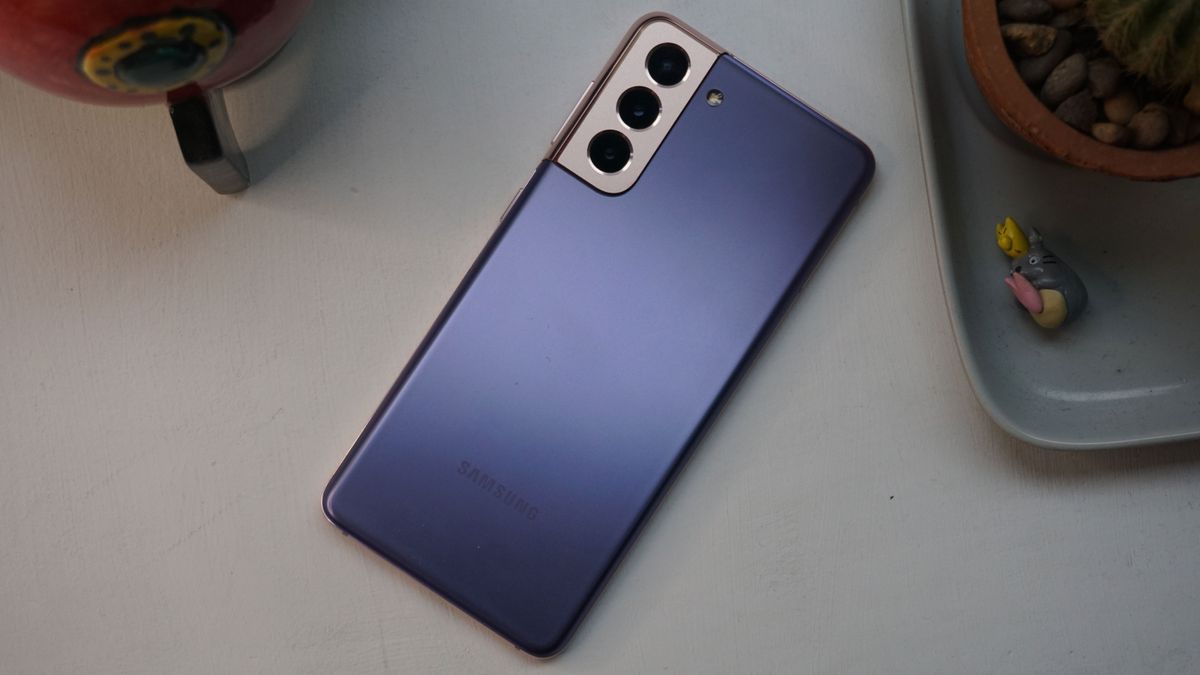
We’re expecting to see the Samsung Galaxy S21 FE later in the year, but so far most rumors have focused simply on its existence and possible release timing. Now, though, we know a bit more about the possible design and specs.
We don’t know any other details about the camera, but we were reasonably impressed by the Galaxy S20 FE’s selfie camera in our review, so if it’s the same sensor then it will probably be similarly good here.
Going green
GalaxyClub also claims that the Samsung Galaxy S21 FE will be available in a light green shade, alongside previously rumored white, gray, purple, and pink options.
While GalaxyClub has a reasonable track record for Samsung leaks, we’d still take all of this with a pinch of salt, especially as the Samsung Galaxy S21 FE is likely still a long way off. But with no conflicting information we equally have no real reason to doubt any of this.
We’ll probably find out the specs in full in August, as that’s currently rumored to be when the Galaxy S21 FE will land, but ahead of that we’d expect there to be loads more leaks and rumors, and TechRadar will report on all the credible ones, so stay tuned for updates.
Samsung Cloud is a cloud storage service that allows owners of Samsung devices to create copies of their data or free up local storage space for apps, music and other files.
However, Samsung is about to begin the process of cutting back this service, withdrawing the ability to store photos and files off-device. Soon, Samsung Cloud will only allow users to store lightweight items, such as contacts, calendars and notes.
According to a notice on the website, the automatic photo and file sync features will be supported by Microsoft OneDrive instead, but only if users take the necessary action before the deadline.
Samsung Cloud deadlines
The pace of the Samsung Cloud shutdown will depend on the region in which you are located. The deadlines for Group 1, which consists of the UK, US, Australia and many European countries, differ from the deadlines for Group 2, which covers much of Asia, Africa and the Middle East.
Members of Group 1 will need to migrate their Samsung Cloud data to OneDrive by the end of tomorrow, March 31. Affected smartphone owners should receive a notification that prompts them to activate the migration process, which is made easy thanks to a OneDrive integration.
If this deadline is missed, Group 1 users will have until June 30 to download their Samsung Cloud data to their device or a computer. On July 1, all photos and files held in Samsung Cloud will be deleted outright and will no longer be recoverable.
Group 2 has been given a little more time to make the necessary arrangements. These users have until May 31 to migrate their data to OneDrive and until August 31 to perform a manual download. On September 1, Samsung Cloud will no longer store the photos or files of any user, in any territory.
Anyone that holds a Premium Storage subscription can expect their plan to be cancelled on either April 1 (Group 1) or June 1 (Group 2) and may receive a refund.
OneDrive storage capacity
Although free Microsoft OneDrive accounts are usually allocated only 5GB of storage, anyone migrating from Samsung Cloud will be given 15GB of storage free of charge, the same capacity as the free Samsung account.
However, the expanded OneDrive storage offer will expire after one year. After that, users will either have to pay to increase their OneDrive storage capacity or transfer their data to an external hard drive, portable SSD or another cloud backup service.
By using 700MHz, KDDI aims to quadruple its 5G coverage expansion rate
Samsung Electronics successfully brings its advanced 700MHz solutions on air for KDDI’s commercial launch of 5G. The use of 700MHz spectrum in this rollout will enhance KDDI’s 5G network coverage, improving indoor and outdoor mobile experiences, and provide reliable 5G connectivity to users.
This low-band 5G network is a significant addition to KDDI’s existing 5G services, which already support the mid-band and mmWave spectrums, introducing a wave of new services to more users. With the benefit of these multiple spectrum bands, KDDI can provide reliable connectivity, coupled with high speeds and wider coverage. For the rollout, KDDI selected Samsung’s advanced 5G solutions, including its 700MHz radio and its next-generation indoor and outdoor baseband units.
“We are proud to deliver on our mission of providing advanced 5G services to our customers, leveraging cutting-edge network technologies,” said Toshikazu Yokai, Executive Officer, Chief Director of Mobile Technology at KDDI. “With the support of leading vendors like Samsung, we hope to continue expanding our 5G service areas with the goal of reaching 90 percent population coverage by early next year. We look forward to bringing improved 5G experience to more users.”
“Samsung is delighted to take part in KDDI’s launch of 700MHz 5G, and in delivering enhanced user experience to millions of customers in Japan. We are proud to contribute to Japan’s 5G expansion,” said Sohyong Chong, Senior Vice President and Head of Software R&D, Networks Business at Samsung Electronics. “We look forward to continuing to leverage our network expertise and 5G technology leadership to support KDDI in their 5G strategy and business objectives.”
Samsung has pioneered the successful delivery of 5G end-to-end solutions including chipsets, radios, and core. Through ongoing research and development, Samsung drives the industry to advance 5G networks with its market-leading product portfolio from fully virtualized RAN and Core to private network solutions and AI-powered automation tools. The company is currently providing connectivity to hundreds of millions of users around the world.
About KDDI KDDI is telecommunication service provider in Japan, offering both mobile and fixed-line communications. With its well-established base of over 58 million customers, and through mobile services and shops offering its “au” brand, KDDI is expanding its services into the “Life Design” business, which includes e-commerce, fintech, nationwide electric power utility services, entertainment and education. With a 60-year history, KDDI is now focusing on creating smart infrastructure through IoT technologies and open innovation with partners and start-up companies in diverse industries. KDDI is accelerating the global growth of its telecommunications consumer business, with operations in Myanmar and Mongolia, and in the global ICT business with the “TELEHOUSE” brand. KDDI (TYO:9433) is listed on the Tokyo stock exchange. http://www.kddi.com/english/
(KXAN) — Just days after the controversial music video for his new single “Montero (Call Me By Your Name)” went viral, rapper Lil Nas X is stoking outrage again over the release of a pair of shoes.
Lil Nas X, who rose to fame after his debut single “Old Town Road” became a global phenomenon, created the “Satan Shoes” in collaboration with the MSCHF clothing brand, according to cultural news outlet Saint.
The shoes will reportedly contain 66 CCs of red ink and 1 drop of human blood in its sole. Other features of the infernal footwear are a pentagram pendant over the laces and “Luke 10:18” written on the side, a Bible verse about Satan’s fall from heaven.
Promotional photo for MSCF x Lil Nas X’s “Satan Shoes” Nike Air Max ’97 (Courtesy of SAINT via Twitter)
Only 666 of the limited edition shoes — set to be released March 29 — will be produced and each pair will be individually numbered. The price tag: $1,018.
While the shoes are Nike’s classic Air Max ’97s, the shoe company has stated it is not involved with the creation or sale of the devilish kicks. Nike told fact-checking outlet Snopes in an email: “Nike did not release nor design these shoes.”
MSCF confirmed the Air Max ’97 shoes are bought independently and customized by its artists.
Pastor Mark Burns, who has appeared as a commentator on CNN and Fox News, tweeted: “This is evil and heresy and I pray that Christians rise up against this.”
Grammy-winning Christian singer Kaya Jones tweeted: “I told y’all what was up a long time ago! You are ready for what we are facing. Better start reading your Bible!”
Meanwhile, the official Twitter account for The Church of Satan replied to the announcement, saying: “Hook us up with a pair fam.”
In response to criticism of his music video — and ahead of the shoe release — Lil Nas X explained he feels no responsibility to appeal to kids who loved “Old Town Road.” In a tweet, LNX said: “I am an adult. I am not gonna spend my entire career trying to cater to your children. That is your job.”
The Samsung QN700A is set to be the cheapest 8K TV that the world's biggest TV seller puts out this year, making it a smart entry-level choice for those of you looking to test out 8K resolution for the first time. But what specifications do you actually get with the QN700A, and how much does it actually cost?
Samsung has been something of a market leader when it comes to 8K TVs. It has evangelized the technology for several years now, and been a big part of 8K's growth, thanks to its global scale and influence as an electronics company.
Samsung's 2021 TV range saw a total of three 8K televisions announced, though which a slight difference from the models we saw last year. This time, the entry-level '700' series – which debuted with the Q700T – was confirmed from the outset. Samsung clearly sees a market for its entry-level 8K QLED, and it's something of a relief to see the 8K range stripped down (2020's Q950TS and Q900TS didn't really have much to differentiate them).
An 8K QLED TV still isn't cheap, but the QN700A is still set to the be cheapest on offer from Samsung this year. And if the Q700T predecessor is anything to go by, it will also offer more compact sizes than step-up QN900A and QN800A sets.
Here's everything we know about the QN700A 8K QLED so far.
Samsung QN700A pricing and sizes
Samsung hasn't confirmed the pricing or sizes for the QN700A 8K QLED just yet, but last year's model will provide a good indicator to what you should expect.
The Samsung Q700T (2020) launched at £1,999 (around $2,700 / AU$3,600) for its smallest 55-inch size, with a larger 65-inch size on offer too.
It was a big drop from the Q800T, which started at $3,199 / £3,799 / AU$4,999 for a 65-inch size.
What's worth noting is that the Q700T only came to the UK and Europe. We're waiting on confirmation on whether US shoppers will get the new QN700A, though it's possible Samsung intends to focus its smaller and cheaper 8K QLED on counties with on-average smaller homes.
(Image credit: Samsung)
Samsung QN700A release date
This is where things get a little tricky. While the QN900A and QN800A 8K QLEDs are already on sale worldwide, there's no sign of a QN700A on the horizon just yet.
Last year, the Q700T equivalent did launch a few months after higher-up models, so it's likely we won't see the QN700A release until mid-2021, speculatively May or June.
Samsung QN700A specs and features
The Samsung QN700A is this year's entry-level 8K QLED, meaning you'll get something of a saving, and the off drop in specification over more premium models. However, it's worth noting that Samsung still bundles all of its top tech together in its 8K models, saving the best in processing, backlighting, and sound systems to make its 8K sets the most desirable in its range.
The big change for Samsung TVs in 2021 is, of course, the introduction of Mini LED. This is a backlight technology that packs in tens of thousands of tiny LEDs – 1/40th the thickness of a regular light-emitting diode – for more precise brightness control and enhanced contrast over traditional Direct Full Array backlights. You're not getting quite the per-pixel control of OLED panels, but it's a big step up, and makes the question of QLED vs OLED harder than ever.
That's all helped by Samsung's latest 8K Quantum Processor, which will ensure upscaling – something Samsung excels in – is really up to scratch, showing off 4K and even HD sources capable on its 8K display.
There isn't an official listing for the QN700A on any Samsung websites just yet, sadly, but there's a good amount we can ascertain about the set from last year's model.
The Q700T offered something of a saving on materials too, without the zero-bezel, 99% screen design. It made do with a 60Hz panel, which may be repeated in the QN700A, so if you're looking for a good gaming TV, you might want to swoop in on a 120Hz television elsewhere in the range. (You are getting VRR support and an ultra-widescreen game mode, though, so it might be a good choice if you're not as fussed about high refresh rates.)
You shouldn't expect the Samsung One Connect Box, which has got a new 'slim' redesign this year and is being saved for select screens. You will, however, get the same excellent Tizen operating system of the QN800A or QN900A, with expansive app support as well as built-in Alexa and compatibility with Google Assistant (yes, there's also Bixby).
There's a new solar-powered remote, which gets rid of the need for batteries, though we're not sure whether it will come to every new QLED TV.
OMARION, 4 hours agothis is samsung low budget tablet a series not high end s series.Its not low budget, A7 is the low. This is meant as S5e successor the mid budget, they have similar model number pattern. I doubt this one would come with S pen (historically based on the model numbers/products) therefore they should compensate it with 120hz. It launch on June, this is also supposedly the time for tab S7/S7+ successors.
Anonymous, 6 hours agoWait.. S7 lite is LCD? I hope this is 120hz and the prize is right. Otherwise, No oled no buy. You're expecting so much on a tablet which costs a lot more to make
O
OMARION
wrg
Anonymous, 6 hours agoWait.. S7 lite is LCD? I hope this is 120hz and the prize is right. Otherwise, No oled no buy. this is samsung low budget tablet a series not high end s series.
T
TOTORO
wrg
really samsung, using mtk p22 in 2021? why samsung is going cheap nowday. atleast using sd460 because regular tab a7 already have sd662.
?
Anonymous
wrX
Wait.. S7 lite is LCD? I hope this is 120hz and the prize is right. Otherwise, No oled no buy.
Z5
They should make a tablet with a screen in a ratio of 3x4. Like the tab s2.