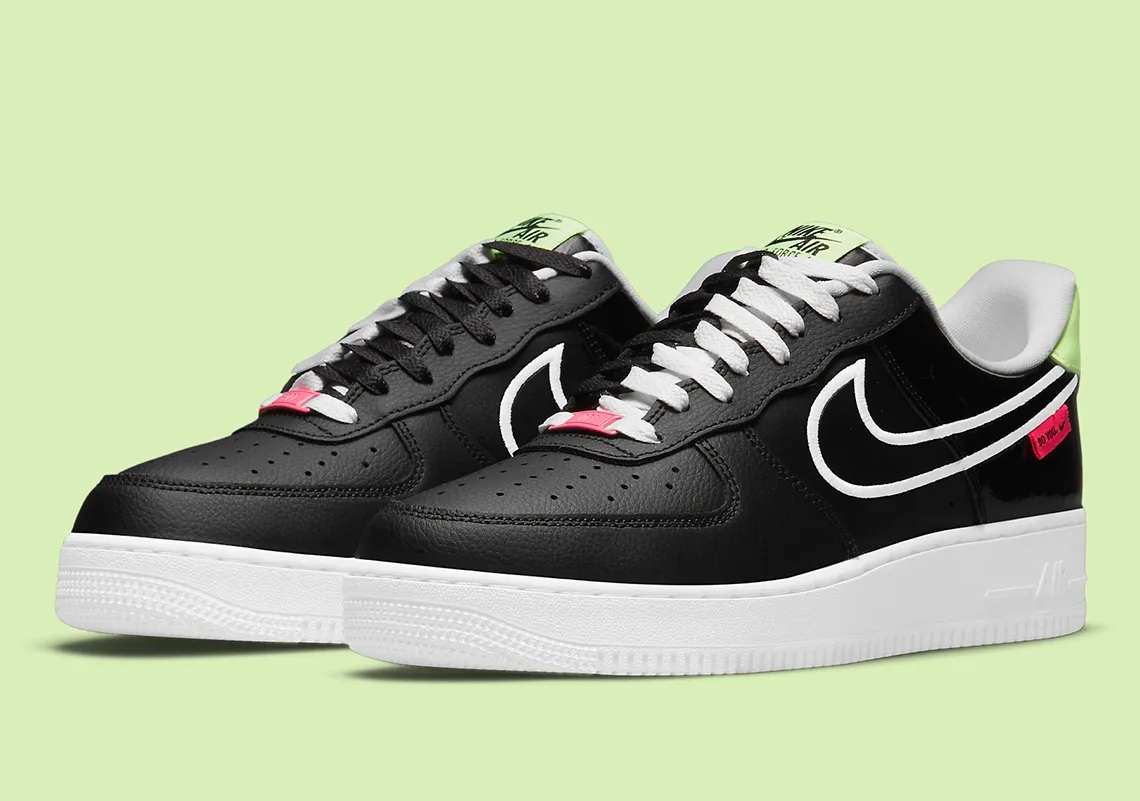
The Nike Dunk Low Disrupt, a new silhouette that bridges retro styles with the currently popular Dunk Low, takes existing forms and applies a filter of distortion. While the general shape and accents are still there, the specific paneling, sole, and details adjacent shine a new light on the staple model by way of a number of familiar colorways — the newest to reveal being a tonal mixture of what is presumed to be Dusty Pink. This shade works its way into nearly all of the upper’s fixtures, including the leather overlays and mesh base. Swooshes layer underneath in complementing shade, matching the lace, tongue, and lining as well. The bottom, then, contrasts with a neutral white midsole and dark gum bottom. Catch these in detail here and expect a release to arrive soon on Nike.com.
(Bloomberg Opinion) -- Before the novel coronavirus hit, the world’s bling behemoths were pulling out the stops to sell “experiences” where their jet-setting customers could indulge in opulent lodging and dining, all while posting photos of themselves on Instagram. Between 2010 and 2019 demand for experience-based luxury, including fine wines and gourmet food, outstripped that for personal goods, such as watches and handbags.
Then Covid-19 upended the trend. Few are crossing oceans to stay at a Bulgari hotel or dine at a Gucci restaurant right now.
But companies from Giorgio Armani SpA to Capri Holdings Ltd.’s Versace and LVMH Moet Hennessey Louis Vuitton SE could still turn the strategy of tapping into luxury as a broader lifestyle to their benefit. They could offer extravagant getaways to high spenders happy to pay extra to dine, shop and relax in a safe and secluded environment. Or coax more potential local customers out for exclusive home-town retreats given people aren’t splurging on long-haul airfare. And they could expand their offering with a broader push into health and wellness, where spending was already booming before the pandemic.
LVMH, the world’s biggest luxury group, is probably the most advanced on this frontier. It acquired Belmond, owner of Venice’s Hotel Cipriani, to complement its exclusive Cheval Blanc hotel chain. Prada SpA owns the historic Milanese pastry shop Marchesi, Ralph Lauren Corp. has chichi bars and Kering SA’s Gucci has opened Osteria restaurants in Florence and Los Angeles with three-Michelin-starred chef Massimo Bottura.
The investments were meant to cater to rich globetrotters, particularly from China. But while consumers around the world are prepared to travel domestically, or to nearby countries, demand for luxury lodging catering to international clients and long-haul flights remains severely depressed. It’s not clear when the number of big-spending tourists snapping up Hermes scarves and Chanel handbags will bounce back.
When it does, LVMH will be able to offer its affluent customers everything from breakfast in bed to the dress they wear to dinner. It could throw in a visit to one of it vineyards in France or a distillery in Scotland for a truly personalized experience.
In the meantime, with sales of top-end goods set to fall by as much as 35% this year, luxury adviser Mario Ortelli says stronger brands may get opportunities to acquire assets that wouldn’t otherwise come onto the market. When it comes to hospitality, that could include trophy hotels.
Offering unique culinary experiences could also be a way for groups to pull in a hip local crowd in the U.S. or European markets. Some luxury brand restaurants are adapting to the new reality: Ralph Lauren’s Polo Bar in New York is offering home delivery.
While social-distancing measures may mean fewer diners, this is less of a worry for the big luxury groups. Hospitality is more about creating an aura around their collections than making money.
And if fewer Chinese are coming to Europe, there may be opportunities in exporting branded experiences to China. Luxury spending is recovering there as travelers stay home. While Burberry Group Plc hasn’t reopened its Thomas’s café in London yet, there’s one in its new Shenzhen store opened in partnership with Tencent Holdings Ltd. Gucci plans another restaurant in Tokyo, but there is no reason why its Osteria collaboration with Bottura couldn’t be expanded to other Asian cities.
At home or abroad, health and wellness offers another area for experimentation. This could include beauty spas, but also wellness services in flagship stores, such as the vitamin infusions offered by London’s Harrods. With many consumers still nervous about hitting the gym, helping wealthy customers get in shape is worth exploring, particularly given the increasing fusion between fitness and fashion.
There are still risks. Running restaurants, hotels and health spas is very different to selling shoes and handbags. For hotels, it requires a distinctive aesthetic, not to mention pockets deep enough to ride out the current travel slump. Even before the pandemic, a bad stay, meal or skin peel risked alienating those who would buy clothing and jewelry. Now any brand offering services faces the additional peril of its premises becoming a source of infection.
No wonder LVMH has appointed an experienced executive to lead its charge. Andrea Guerra, formerly of Eataly and Ray-Ban maker EssilorLuxottica SA, will soon take up the role of chief executive of LVMH Hospitality Excellence. Partnerships with restaurants, hotel operators or high-end fitness chains are another option. For example, Marriott International Inc. operates the Bulgari hotels.
Either way, expanding into new categories amid the worst luxury downturn in modern history is not for the fainthearted. But the biggest players take a long-term view. Offering extravagant experiences is one area where this approach could pay off.
This column does not necessarily reflect the opinion of the editorial board or Bloomberg LP and its owners.
Andrea Felsted is a Bloomberg Opinion columnist covering the consumer and retail industries. She previously worked at the Financial Times.
Louis Vuitton's collaboration between their menswear artistic director Virgil Abloh and Bape and Human Made Founder Nigo, called LV2, has made its way to New York's SoHo neighborhood. The collection has taken up a temporary residency at Louis Vuitton's location at 116 Greene Street and will remain there through mid-October. Products available include the ready-to-wear, leather goods, footwear, and accessories.
LV2 marks Virgl Abloh's first collaboration for Louis Vuitton. The collection was originally unveiled in December 2019 and became available this past June. In addition to being available at the SoHo location, it will also be available on louisvuitton.com.
Louis Vuitton also experimented with the pop-up format for Abloh's Louis Vuitton collections last year with a pop-up shop on the Lower East Side. The pop-up format proved wildly popular (and very instagrammable) attracting a waiting line of visitors and customers.
Pop-up shops are expected to be the future of retail as retailers have become more hesitant to sign long-term leases. Pop-ups also offer a more experiential approach to retail, which shoppers have come to expect rather than just looking at things they can just order from home.
Samsung has opened up preorders for the Galaxy M51 in Germany, officially confirming that its latest midrange phone has an absolutely massive 7,000mAh battery. It costs €360.01 (about $429), and Samsung’s site says that it expects the phone to start shipping on September 11th. There’s no sign of preorder pages on Samsung’s other regional stores just yet, but a release in India seems likely given that Samsung teased the phone there last week.
At 7,000mAh, it isn’t the biggest phone battery we’ve ever seen. Last year, for example, Avenir Telecom showed off an Energizer-branded smartphone containing a bulbous 18,000mAh battery. But it’s almost unheard of in devices from mass-market manufacturers like Samsung, and we’ll be interested to see what effect it has on the overall size and weight of the handset when it releases.
Aside from its battery, the Galaxy M51 has a more typical set of specs for a phone of its price. It has a 6.7-inch OLED screen with a central hole-punch notch for its 32-megapixel selfie camera. Around the back there are four rear-facing cameras, a 64-megapixel main camera, a 12-megapixel ultrawide with a 123-degree field of view, and 5-megapixel macro and depth-sensing cameras. It’s got 6GB of RAM, 128GB of internal storage, and Samsung says it’s powered by an “octa-core processor,” which GSMArena notes is thought to be a Snapdragon 730.
At €360.01, the Galaxy M51 has a very similar asking price to the Galaxy A51 in Germany, but it sounds like it might be the better option if you absolutely need every hour of battery life.
Samsung is continuing to drive strong revenue growth through its U.S. mobility channel program as the company expands its work with partners and releases business-friendly devices at a steady clip, Samsung’s mobile channel chief told CRN.
The latest Samsung devices to launch with big potential for mobility solution providers are the Galaxy Note 20 and Note 20 Ultra, which feature a wide range of features aimed at workers.
Mike Coleman, vice president and mobility channel chief at Samsung Electronics America, spoke recently with CRN about the growth of the company’s channel efforts, key verticals for Samsung’s B2B devices and key business capabilities of the Galaxy Note 20.
“It’s one of many B2B tools that are part of the lineup now,” Coleman said. “The Note 20 is becoming more and more business-centric.”
What follows are five key comments from the interview with Coleman.
B2B Growth
“We are on track to just about double the business again this year--despite all of the COVID-related challenges. The business is really doing well. We came off of a really strong first half, and our second half is shaping up to be very promising. Our pipeline looks really good.
I think there’s a tremendous opportunity for partners that may or may not have focused on a mobility strategy. And when I say mobility, that can be a laptop, a Chromebook, a tablet, a wearable, a phone--a device that solves a problem. It is not simply a personal device, it’s really a tool for work.”
Channel Expansion
“We have also increased the size of the [U.S. mobility channel] team about 30 percent. We keep adding people to the team. We’re going after deeper coverage for the NSPs as we call them--CDW, Insight, Connection and such. We’re adding more folks to distribution--because as our business grows, we need more and more focus on the distro, Tier 1 side. And then we’re also expanding the geo coverage, for the geographically dispersed partners. So it’s really exciting, where we’re actually growing on all fronts.”
Key Verticals
“We’ve seen some very large wins in healthcare, transportation, logistics, education. The Chromebook business is off the charts in terms of growth. That business is a rocket for us. And that’s obviously education-focused. We’ve seen good solutioning on transport fleet management. Everybody’s at home, but they’re ordering stuff. So the trucking and transportation business has been growing rapidly, and we’ve partnered with quite a few different resellers in that space to equip fleets with the Galaxy Tab Active2, for example--with the ruggedized tablets and solutioning for ELD tracking. We’ve had some really big wins with some healthcare providers on the phones to track diabetes or blood pressure or things of that nature--where we’re able to use the devices in partnership with resellers and ISVs to manage healthcare applications.”
Galaxy Note 20 For Business
“If it’s going to be used as a business device, it has to have an amazing battery and have really good performance. So we’ve done that. We’ve loaded it with the Knox security features so that remote employees are protected. The S Pen is really cool now--the latency is significantly reduced. We’ve synced up with Microsoft and Cisco--we’ve optimized it for Microsoft 365 / Teams and for Webex.
DeX has been a big point of interest for a lot of resellers, because now you can [more easily] transition between mobile and desktop. So for example, you can connect the Note 20 to a monitor or even a Smart TV--which is really interesting, because every boardroom now has Smart TVs. So you can wirelessly connect and present--when we go back to the office--or even using your TV at home, you can use that as a monitor, if you wanted to. It’s obviously 5G equipped and enabled. And so those are some of the things we’re finding companies are really interested in, in terms of equipping their employees with a device for business use.”
Recruiting Partners
“We’re looking to recruit new partners, which we’ve continued to do. We’re working closely with our distributors to identify partners that have an interest in mobility. So we’re actively recruiting new resellers--and we’re obviously working with resellers that have been with us for quite some time to help them deliver more solutions, and to generate more revenue and more profit.”
The most recent top of the line smartphone release from Samsung has an opening list price of $1,300 and most reviews, mine included, could be summed up in a few words. Great phone, but so expensive? Now, during a pandemic, when millions have been thrown out of work?
This really comes to home when you consider that there are three fantastic smartphones out now for $400 or less: The Samsung Galaxy A51 and Apple iPhone SE will cost you $399, while the Google Pixel 4A is just $350.
And they are clearly the best bargain-priced phones I've ever seen. Unless you need the latest camera technology with multiple lenses, there is no reason for most consumers to spend more on a phone. You won't be missing out.
All are worth your attention if you're looking for a replacement phone, or a new model for the kids. Meanwhile, new phones are scheduled to be released in a few weeks from Google (a new Pixel) and Apple (several models of iPhones) and are expected to cost way more than $400. So how do the budget phones compare?
Samsung Galaxy A51
The biggest of the phones is a $399 bargain, with a beautiful 6.5-inch screen the size of the $1,099 iPhone Pro Max, and even larger than the $999 6.2-inch Samsung Galaxy S20. . You get a second lens with the camera, which the rivals don't have. And while that's a plus, Samsung tends to over-saturate your photos, so if that's a problem, and you want to remain in the Android family, you'll want to look at the Pixel 4A.
Google Pixel 4A
The best bargain in smartphone land, at $349, the Google phone is an Android flagship with a 5.8-inch screen, fast processor, and a terrific one-lens camera that can take some pretty amazing night photos in the dark. Plus there are add-ons like the ability to add live captions to both homemade videos and ones you watch on YouTube, and an instant transcription service using Google's voice recording app. The Pixel 4A is clearly the best Pixel phone Google has made, one so good, I think if the line had launched with this model, Google would have been able to turn Pixel into a mass market brand. Google's market share is under 1%, while most phones sold in the United States are from Apple and Samsung.
Apple iPhone SE
This is the Apple phone for those who didn't like bigger phones, with a 4.7-inch screen, and yearn for the classic iPhone, one with a Home button for navigation, Touch ID instead of Face ID, and a headphone jack. Apple's nod to modernity is a powerful A13 processor, the same one that's in the current top of the line iPhones. It's classic in every sense, but as powerful as the latest iPhone. If you prefer living in an iPhone world to Android, this is the phone for you.
None of these phones are compatible with the new, faster 5G networks. However, know that in our tests, true national 5G service that isn't spotty or as fast as advertised is still at least a year away, if not longer. So you won't be missing anything now by waiting.
Decisions, decisions
Which one is best for you? It depends whether you prefer Android or iPhone. I'd choose the Pixel 4A over the Galaxy because I'm not a fan of Samsung bloatware or the somewhat over-saturation of photos, (notice how the oranges below are "orange orange" in the words of the old Trix rabbit, compared to just orange on the Pixel and iPhone) but these are minor quibbles. I could easily live with either.
On a specs basic, you'd have to go with the A51, for the bigger screen and second camera lens. But if money's tight, the Pixel 4A is fantastic. As is the SE. You couldn't go wrong with any of these phones.
Readers: if you had to take one of these phones to a desert island, which one would you select?
Follow USA TODAY's Jefferson Graham (@jeffersongraham) on Twitter
Samsung has just announced a major breakthrough in the development of RAM for mobile devices, and it could make the Galaxy S21 due out in the early part of next year faster than any of its contemporaries.
The company says it's begun the mass production of its new 10-nanometer 16GB LPDDR5 RAM chips, built using a new technique called extreme ultraviolet technology.
This process results in components that are 30% thinner than the LPDDR5 modules in modern smartphones, according to Samsung, and 16% faster than the current 12GB chips in the latest devices. That even includes the just-released, $1,299 Galaxy Note 20 Ultra.
Samsung says the new technique "overcomes a major development hurdle" in packaging more RAM at ever-smaller sizes in heavily space-constrained devices, like smartphones. Not long ago, 8GB was the standard quantity of RAM in high-end Android products, but some phone makers, like Samsung and OnePlus, have pushed the industry toward adopting 12GB and even 16GB for the most premium models over the past several months.
Of course, the more RAM at a device's disposal, the more bandwidth it has to handle multiple tasks at one time, including background processes users may not even be aware of. And the faster that memory is, the more readily it's available, in turn allowing the device to dispatch each task more swiftly.
(Image credit: Samsung)
According to Samsung, these new chips are so fast, they can transfer 51GB of data in one second. In addition to the firm's own mobile products, you can expect these chips in devices from rival phone makers as well.
Samsung also says it will bring its LPDDR5 solutions to the automotive realm, which will surely benefit modern cars that rely on fast data transfers for everything from sophisticated infotainment systems to assisted driving tech.
Given that Samsung is a major RAM producer, especially in the mobile realm, you can expect this technology to flourish in 2021 and make its way to a number of premium devices. But it'll still likely debut first in the Galaxy S21, as the company typically uses its own hardware to debut innovations that eventually trickle out to the rest of the industry in due time. And that could make it a serious rival to the iPhone 12 expected to arrive this fall.